The Body Image in Sports

Weigh-In Pains

In the morning of the competition, I enter the weigh-in room.  I see the scale on the floor. The technical officials are sitting at the desk.  Shoes, trousers, hoodie, and T-shirt. Off they come. I dread this moment as I step onto the scale.

I stay still as my weight is read out. I step off.

I stand there in the body-fit singlet. I feel exposed. I hate how I look. This part never gets any easier. This is a sport governed by weight categories.

I have never embraced my body as to its size or appearance.


Sports Where Size Matters

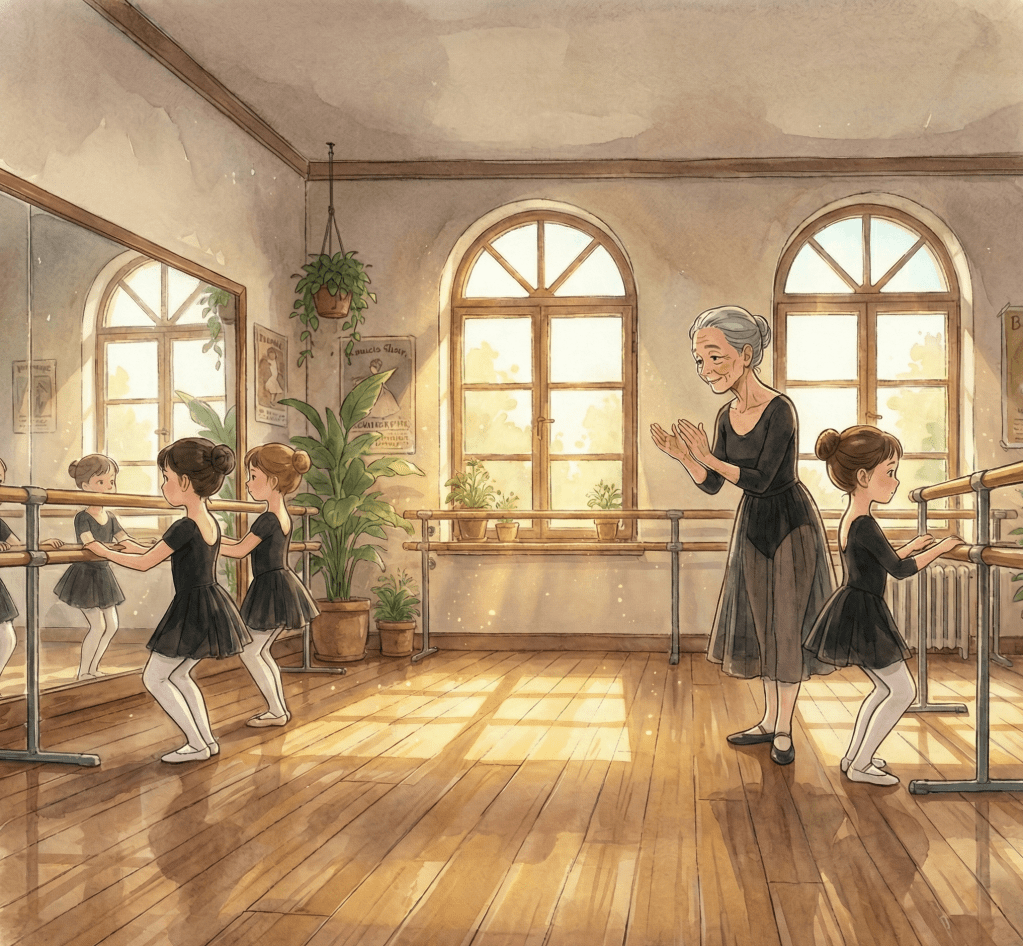
In ballet, I was too heavy and chubby. Or at least, I believed I was. In the studio in Japan, I was always surrounded by very thin girls. We wore leotards, pink tights, and pointe shoes. The girls were elegant and delicate. And that was what women were expected to be anyway.

Westerners romanticise Japan.

Oh, look, everyone’s so thin and healthy. Obesity is so rare in Japan.

True. Japanese food is, by and large, healthier than the Standard Western Diet. But Westerners don’t understand the reality behind Japan’s slimness. There, there is nothing wrong with fat-shaming or ridiculing someone for being overweight in public. Gaining weight is a personal failure, a lack of discipline. The word ‘fat-shaming’ does not even exist in Japanese. People, especially women, are expected to stay slim, a standard that is often unrealistic by Western measures.

When I was a teenager, girls were expected to be delicate and tender. A girl was praised as a “箱入り娘 (hakoiri musume)”—a porcelain doll in a gift box. Later, fresh graduates were called “職場の花 (shokuba no hana),” meaning “flowers in the office.” We weren’t expected to lift anything heavier than chopsticks.

In the ballet studio, the teacher used to say, “Look at that man, Arnold, whatever! Do you want to look like that? Do not lift anything heavy!!! You will bulk up.

So we laid out yoga mats and did a hundred reps of Pilates abs work instead.

In my twenties, I lived on lettuce and cucumbers during the week, with tomatoes for occasional treats. On weekends, I binged on cakes. My role model was Sylvie Guillem, the French ballerina. Bodyweight management was a constant struggle.

I was constantly fatigued, but strong coffee kept me moving. Then my periods stopped. But that was Okay. Not one person at the ballet studio had a regular period anyway.


From Dance to Distance

When dance left me with a broken heart, running found me.  Running didn’t expect much from me.  I just had to show up and run.  That was easy.  But I was too thin for a runner.  I lacked the power to propel my legs forward.  

Running changed my complicated relationship with food.  To survive club training twice a week, I had to eat.  With too little food, you don’t have energy to run.  Then, too much food makes you sick during the training.  I had to plan food carefully. What, when, and how much.  Then came ultra-trail running, where caloric demands are immense. Here, you’ve got to eat.  It doesn’t matter if you are hungry or not.  You just eat.  A lot.  

Ultra-trail running was the first sport where my body became an advantage. Ultra-trail runners don’t run like track athletes or middle-distance runners, where power matters. It’s a long-haul endurance race.  Runners move up and down mountains, carrying rucksacks for hours and days. Being short and light, I was finally celebrated as an “efficient” runner.

Then came weightlifting.


Too Light to Lift?

Weightlifting, ironically, is meant to be about fairness. Athletes are grouped by weight class so we can compete on a level playing field. But the system is far from fair.

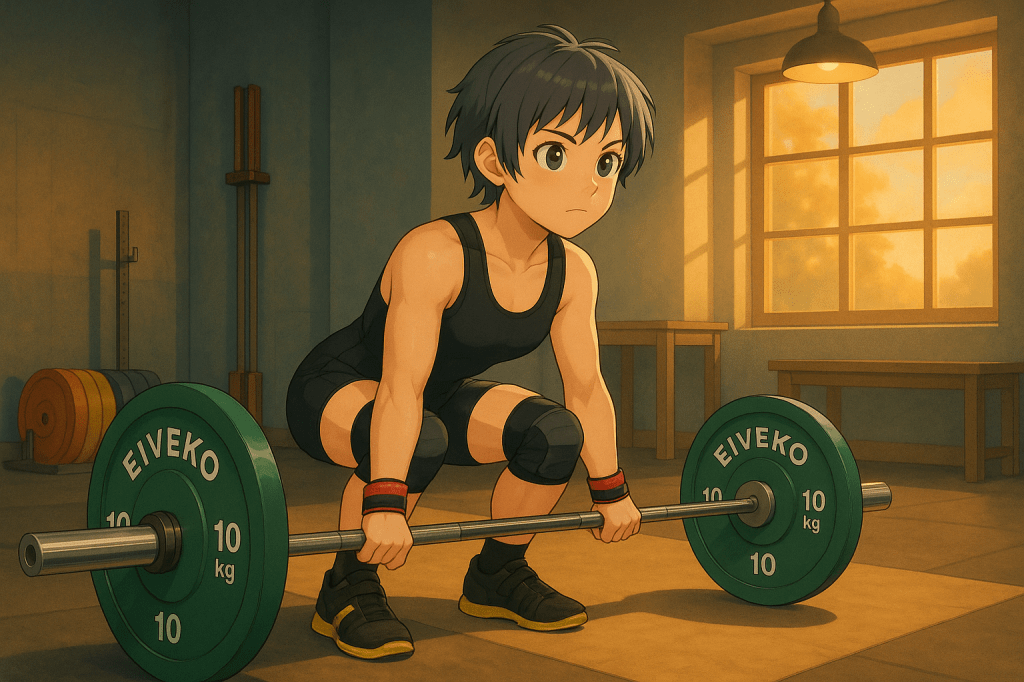
The lightest female category is 48 kg. I often weigh 43 or 44 kg, which is five or six kilos under the category minimum. In a sport where bodyweight correlates with lifting potential, this matters. I have to meet the qualification standards designed for heavier women.

At the other extreme, the heaviest women’s class is 86+ kg. A woman weighing 130 kg can qualify by meeting the same standard as someone 40 kg lighter. The same 20 kg barbell represents almost half my bodyweight, but far less for others.

The standard kit isn’t built for my size either. Most weightlifting belts are 10 cm wide, cutting into my ribs and hips because my torso is shorter than most Westerners’.  It took me years to find a 3-inch belt that fits. The lightest standard bar-and-bumper plate set starts at 25 kg, which is already 55% of my body weight. Some gym owners won’t even let you drop that bar if it’s “only” 25 kg. Imagine telling a 130 kg woman she must start with 70 kg and keep the bar off the floor. Outrageous, right?

And then comes the constant stream of comments.

“Have you been eating properly?”

“Are you getting enough protein?”

“You gotta eat to get strong.”

Come on.  No one asks the overweight person to eat less in public. How rude!  


Redefining Strength

I’ve worked with Michaela Breeze for over two years now. She is a former Olympian, but she is not a stereotypical stocky lifter. She is lean, tall, and long-limbed. She focuses on speed, power, and technique. And she prioritises injury prevention over numbers.

When I saw her demonstrate how to drop a failed lift safely for beginners, I knew this was someone who takes her athletes’ longevity seriously.  Her coaching changed my understanding of the sport.  That strength isn’t just about how much weight you can muscle, but how efficiently you move.  With speed and power.  Her textbook technique is proof that size isn’t everything.

My first two coaches, both young men, idolised bulk. Their eyes lit up when big lifters moved big weights. Their style relied on muscle size and strength.

I get far more excited watching a small-framed lifter who moves with technique and efficiency.


Health and Strength

With Japanese DNA, I will never grow big muscles like my Western counterparts.  Despite all the hours in the gym, I still have osteopenic hips.  Yes, “osteopenia”.

It wasn’t until my late 50s that I heard the word “osteopenia.”  Friends and colleagues around my age were starting to break bones left, right, and centre. For the first time, I started to worry. After a lifetime of being underweight, I run the risk of fracture. No one ever warned me of that.

What I did in my twenties and thirties cannot be undone.  It is a long-haul journey to rebuild the body.  

Never mind that.  Just focus on what you can do today.    

I lift to get strong. That’s it. Simples.

I lift to challenge the system and stereotype.  I redefine strength.

Stay focused.

Be Strong.

Waking Up to Myself: A Journey from Dreams to Healing

The Dream

I was a fly.  I was flying, circling above the dinner table, unnoticed and silent.  I could go anywhere.   Then I noticed a cloud of mist following me.  Insect Killer!  I frantically flew to the next room, and the kitchen, and I darted in between the cupboard doors.  I positioned myself in the dark corner, holding my breath.  Then the cupboard slammed open.  There it was.  The Spray. Behind the spray, I saw my mother.  Her eyes, emotionless.  Searching.   

I fell off the bed as I woke up from the dream. The heart racing. It was just a few days before I left my parents’ home for good.  I was 23.      

Wake Up to Sleep

In the summer of 2024, as I scrolled through my Instagram feed, I found a weekend workshop at the Buddhist Centre near my house called ‘Wake Up To Sleep’ by Charlie Morley.  I knew nothing about his work and assumed that he would be teaching some sleep hygiene technique.  Something I needed to learn to sleep better.  While I was partially correct, the session was more about lucid dreaming and mindful living techniques.  Most people in the workshop seemed to know what the term ‘Lucid Dreaming’ meant, and they were there to learn lucid dreaming.  I was Google searching for the term “lucid dreaming” during the session break.  

That weekend changed everything.

When Talking Therapy Wasn’t Enough

Earlier that year, I had ended a three-year relationship with my therapist. When I told her I was feeling better, I was lying. The truth was, I felt no better than when I’d started through the NHS.  Three years of weekly sessions had made almost no difference.  It wasn’t her fault.  She was kind and compassionate. She was following the classic CBT technique. But I just couldn’t bear another hour of having to come up with something to say. It was excruciatingly boring.  It was not working.  

Breathwork and Yoga Nidra

At the Buddhist Centre, as I followed along with the breathwork and Yoga Nidra alongside 100 other participants, I started to feel better. I felt lighter. I liked the way the air entered through my nose, then into my body. The room was peaceful and silent.  

I began daily practices of breathwork, Yoga Nidra, and dream recall.  As with everything in my life, I had to try everything that was offered.    I enrolled in Charlie’s online course and joined monthly Zoom dream circles.   

Then in July 2025, as if all these were not enough, I joined a weeklong retreat to the Scottish island, Holy Isle.  

Uncomfortable

Therapeutic work, I learned, is not pleasant. The retreat is not a relaxing holiday with spa treatments and massages.  There is no distraction.  

I sat and went deep down into my psyche.  As I was told, I wrote down random words as they came to mind. These words were a true reflection of myself.  The random words started to form sentences in my mind.   

  • I amplify my failures and mistakes.
  • I downplay my achievements and success.
  • I actively try to appear unimportant and uninteresting.
  • I actively avoid people who show interest in me.

I stared at the paper that I had just written.

Why? 

Why would anyone deliberately try to look unimportant and embrace failure? 

There was a simple answer to it.  It had always been my defence strategy against parents who consistently punished me for any moment of success or joy.  They were happiest when I failed.

I handed my paper to the lady sitting next to me for discussion.  The tears started pouring down. I buried my head in both hands.  I couldn’t look at her.  I couldn’t breathe.  

Whilst people were queuing up for lunch after the session, I jetted off outside alone. I had to run. I had to clear my head. I didn’t bring any running gear to the retreat, so I just wore a T-shirt and pyjama trousers.  

Holy Isle is a small island with a circular loop. The narrow footpath led me up to the top of the hill. When I reached the top, the lighthouse was in the distance.  I was drenched with sweat, but at least I was breathless enough to feel like I had shed some dirt off my skin.  My mouth was salty with tears and sweat.   

There was no ferry back to the main island until the last day of the retreat.  I stood there for a while until my thoughts calmed down.  

Buried Inner Child

My parents were not very nice people.  I can say this finally, as they have passed away. I do not mean to broadcast the ill feelings towards the deceased, as I had the final closure when they passed.  I am at peace with them. Let them rest in peace.  

During the three years with my therapist, I convinced myself that my little “so-called” inner child was dead.  That child was clueless and helpless, crying in the dark corner of the closet.  She spent hours daydreaming about imaginary “real” parents. I am not that child anymore.  I am a resourceful adult with education and a career. I do not even need to mend the relationship with my parents.  They are dead.  

So, the idea of revisiting an inner child felt like ripping open an old wound and pouring alcohol on it.  

Dreams, Shadow and Inner Child Work

Dreams don’t lie.  Since I began recording them, I noticed a shocking pattern. My parents keep appearing in my dreams.  Even worse, they are always hateful and violent. Shouting, spitting, smashing things, or even threatening to kill me or someone else.  If you have ever seen Quentin Tarantino’s films, that’s the closest.  You know what I mean.  

It was pretty clear that I had some issues.  And perhaps, working through these dreams might help me resolve my never-ending anxiety over everything in the world.  

Anyways, I was back from that run. I reluctantly went back to the prayer room.  I sat again for the session and wrote a letter to my younger self.  

A Letter to My Younger Self (8 years old)

Hello, Hisayo-chan,

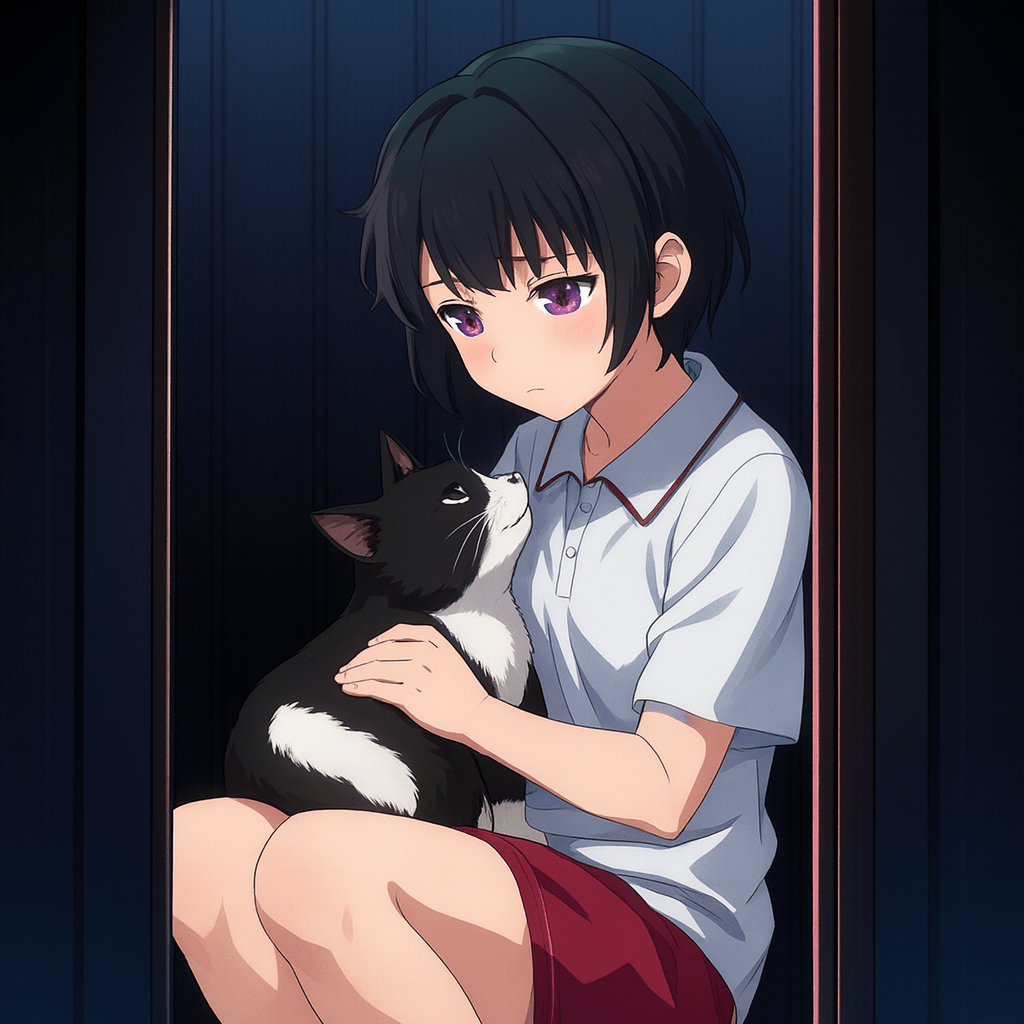
My name is Hisayo.  I am the older version of you.  I live in England – the country with Kings and Queens.  Here, people drink tea with milk and sugar.  Ludicrous, right? I have a house in London, with a little garden to grow flowers and vegetables.  I have a cat named Ollie.  He is black and white, just like your Pick.  Ollie plays in the garden but is not as adventurous as Pick.  He is always scared of the other cats from next door.  I suppose it is good, as he won’t get in a fight like Pick does, right?    

How are you?  I hope you are feeling happy.  But if not, don’t be afraid to show it.  Shout.  Cry.  Throw a tantrum.  It is okay to do all these things.  That’s what children do.  You don’t have to look OK all the time.   

You are such a good child.  You always jump up to help your Mama do the washing up, mopping the floor, and tidying up the laundry.  You always shout out to say Mama’s food was delicious, even when it wasn’t.  You know that your Papa would get drunk and become rude, so you always have to make your Mama happy.     

Remember the time when your Grandma asked you to be kind to your Mama when she was mean to you?  Well, your Grandma was wrong.  It is not your responsibility to make your Mama happy.  It never was.

Your Mama didn’t know how to raise a child. No one taught her what she was supposed to do. Your Papa is lonely. He gets angry and shouts because he drinks a lot of alcohol, and alcohol changes a human’s brain.  You must understand this: this is not your fault. You have done nothing wrong. 

Adults are selfish.  We only care about ourselves.  We don’t think about small people.  We expect small children to carry all our emotional baggage.   You will understand when you get to my age.   

I am sorry that you were not given the childhood you deserved.  But this is going to change now. Going forward, I am going to sit with you so that you can show me your schoolwork. Because I want to tell you how smart you are. I am going to give you a hug so that you know what love feels like.

I want you to know that I love you very much.   

Lots of Love and Hugs,

Hisayo 

The Ongoing Journey

This letter remains a work in progress.  I edit and refine as I go.   

My mother most definitely suffered from a psychiatric dysfunction although she was never diagnosed, nor did she receive any support.  It was a doll’s house in a traditional Buddhist household and they avoided doctors and lawyers at all costs. Seeking professional help was frowned upon.

I continue my journey.  But I am not that person who keeps up with journaling or meditation on a daily basis.  But I try.  The difference is that I am not in denial.  I am not deserting myself in the dark.  

And I say…    

You are good. You are worthy. And none of it was your fault.

Running as Therapy

Running clears the mind and lifts the spirit.  Running is often seen as a tool for mental health. But be very careful.  Running does not make your problems go away. Running is never a substitute for therapeutic work.   

Therapeutic work is not just about a therapist sitting on a big couch and listening to your story.  There is no one-size-fits-all or cure-all therapy model.  It is a continuous work, a journey with trial and error.  

Don’t let running or any sports distract you from seeking help.

Let’s begin the healing from within. 

Links:

Charlie Morley – Lucid Dreaming teacher

https://www.charliemorley.com/

Holy Isle – Centre for World Peace and Health

https://www.holyisle.org/

Breaking Barriers and Finding Strength

Goodbye from HSBC

In November 2018, I was made redundant from HSBC. Eight years of hard work. Long hours. A job I didn’t even like. I stood on the platform at Canary Wharf, holding a neat little divorce paper from HR. Shellshocked. I was at a loss. How dare you?

But underneath the shock, I was somewhat relieved. No more 45-minute breathers hiding in the company gym. No more soggy sandwiches and overpriced lattes. I could finally make coffee at home, cook my own lunch, and maybe—just maybe—do something meaningful for once.

I enrolled in a Pilates practitioner course. It felt like a logical next step. I’d done years of ballet and contemporary dance—core strength, mobility, body awareness, all that. Maybe I could teach runners how to move better.

Why Not Pilates?

The more I learned, the more I realised that this wasn’t it. Pilates has its place—Joseph Pilates developed the reformer Pilates to help WWI soldiers who were amputated in hospital beds. But I wasn’t bedbound. I was an ultrarunner pounding trails, absorbing forces four times my body weight with every step.  Pilates wouldn’t cut it. I needed something more powerful, stronger, and heavier.

Falling in Love with That Bar

I asked a friend from the running club: “Know anyone who can teach strength training?” She gave me the contact details of a guy who had started a barbell club. I had no idea what I was getting into. I vaguely thought maybe he would teach me how to bench press. Or deadlifts. Those were the only lifts I knew. But he turned out to be an Olympic lifting specialist.

On day one, I stood with a barbell in my hands, shrugging my shoulders up and down. No idea why. Just did what I was told.

The club was an extension of the university’s barbell club. Everyone around me was in their twenties—students and recent grads. Wonderfully young and trendy with flexible joints. Meanwhile, I was a 54-year-old ultrarunner with stiff joints who couldn’t even squat below parallel.  I’d never felt more miserable and out of place. And I definitely wasn’t “one of them.”

But I didn’t leave. I was intrigued. As a movement nerd who loves watching how the human body moves, I wanted to understand the mechanics. I dreamed of one day catching a snatch in a full deep squat. I watched videos. Took notes. Practised.

This Place Is Not for You

One day, I managed to secure one of the gym’s four squat racks during rush hour. I was trying to back squat when a smiling PT walked over.

“Hey, I think this is too heavy for you, you might get injured. Why don’t you come over here with me, I’ll show you some kettlebell work.”

I knew what he meant. “This is not for you. You don’t belong here, old lady.

That night, I ordered my own squat rack, barbell, and bumper plates. If I wasn’t welcome there, I’d train at home.

Then COVID hit. Boris announced full lockdown, and I found myself sitting in my living room, alone with my new equipment while the world shut down.  For the next two years, I trained on my own. I never went back to that gym.

Pain and Anger

During this time, I was suffering from severe back pain. My hope was to get the root cause, once and for all. I sat with the sports consultant with the MRI scan result in front of us. The consultant walked me through the results from the lab. Basically….I have degeneration in my lower spine—cartilage damage, marrow oedema, and bone fusion between L4 and L5.

“Cut your running down to 20km a week,” he said, as a matter of factly. “Stay away from explosive movements. At your age, with this kind of wear and tear, Olympic-style lifting is inappropriate. You are post-menopausal, after all.”

Then came the osteopath: “You just have osteoarthritis. This is normal for someone your age. It’s called wear and tear. There’s nothing we can do about it. But you can learn to manage the pain.”

I was furious.

I’d lived with back pain my entire life. By age 13, I had chronic back pain from gymnastics and was the youngest patient in the physio clinic. Through falling grades and sleepless nights, I’d pushed through the pain. I’d tried every pain management technique available on earth: physiotherapists, osteopaths, chiropractors, acupuncturists, Reiki practitioners. I’d learned yoga, Pilates, aqua-walking, and the Feldenkrais method. I’d always had ergonomic chairs, back rests, and sit-stand desks at work—all to manage the pain, hoping that one day it would go away.

Not one person had helped me eliminate my back pain.

And now this: Too old. Too broken. Sorry, but it’s too late.

I was absolutely furious.

I Want to Get Strong

I cancelled my appointment with the osteopath. I didn’t need another pain manager. I needed a different approach entirely. Instead, I hired a strength and conditioning coach focused on sports performance.

I have absolute faith in physical therapy.  Strength is the key.  “I want to get strong. Design a program for me. I want to run. I want to lift. I want to move. I’m going to train like you’ve never seen before.”

Three years later, after dozens of strength training blocks, I am stronger than I have ever been in my life. I am no longer in pain. I can now squat down to untie my shoelaces after a 20km run. Look at that. I couldn’t do that before!!

When I finally took back control of my body, everything changed.

The Lesson

Don’t accept advice from people who tell you that you’re too old or too broken. Work with people who believe you can achieve whatever you set your mind to.

Because you almost always can.  It’s never too late.

Let’s challenge the norm. Together.

Chasing the Dragon: Five Days Across a Country

The Dragon’s Back Race is a five-day mountain race that spans 315 km across the entire Welsh mountain range, with a brutal 15.5 km of elevation gain. Billed as the ‘toughest foot race in the world,’ the course includes only a few mandatory sections; competitors have the freedom to choose their own routes. There’s no external support — each competitor carries everything they need.

In 2017, I was one of the 223 starters.

Why did I enter? It started with a YouTube video — sweeping aerial shots of runners crossing the ridgelines of the Welsh mountains. I wanted to be one of them.

I wasn’t particularly fast. My navigation skills were basic. I was turning 52 and just fighting to hold on to the fitness I had. If I had to wait until I was fit enough to do this race, it would never happen. I’d rather try and fail than wonder forever.

Day 1: Carneddau, Glyderau, Snowdon
Distance: 52 km | Elevation Gain: 3.8 km

A cold, windy start at Conwy Castle at 7:00 a.m. I stood there on my own, one head height shorter than everyone else, beard-less and tattoo-less.

A man looked down at my feet. “You are wearing the wrong shoes, luv.” He was referring to my barefoot shoes. This happens to me all the time. I just nodded and looked away.

The ridges were busy with 223 runners all trying to pass through. We scrambled over rocks of every size, up and down, left and right. Wind whipped across the ridges, as if trying to blow us off. I kept my map tucked against my stomach, juggling movement, hydration, and trying not to fall. The rational part of me was telling me to stop and admire the beautiful view from the summit. No. My eyes were glued to the underfoot.

I knew it. The Glyderau range was difficult. Before the race, I’d recce’d the route twice, and each time, I got confused. I scrambled up, hands and knees on loose scree. Clouds swallowed the summit. GPS becomes totally unreliable in a mountain range like this. I trusted my sense of direction and gut.

Instead of reaching the top of Tryfan, I found myself on top of a giant boulder. This boulder did not appear to be connected to anything underneath. A thick fog came down, blinding my eyes. I could not see anything a metre ahead. In that split second, I forgot where I came from. Damn, what a fool you are…

I squatted down and lowered my feet, rolling sideways to slide down. I slid down at a faster pace than I’d hoped, but I did stop eventually. Small pieces of shattered scree ended up in my mouth, pocket, and nose. I sat on a large rock, my heart still pounding from the shock. I missed the cut-off.

Day 1 ended with a disqualification. I didn’t even reach Crib Goch — just like that.

Day 2: Nant Gwynant to Dolgellau
Distance: 58 km | Elevation Gain: 3.6 km

4:45 a.m. alarm for a 6:00 a.m. start. A new day. A second chance. Let’s go.

It was cold, wet, and misty. Loose scree underfoot made every step a fight. We were ticking off the controls on the mountain. One person headed in one direction, while another came back from the opposite direction, shouting that they were in the wrong place. Then, everyone around me vanished in all different directions. GPS was not working.

Eventually, I found all the controls on the mountain and descended to the moorland.

Navigation in the moorland is different from that in the mountains. It was no easier, but at least the sun was out.

Luckily, I teamed up with two other runners. We had a map, a compass, and a GPS between us. We went back and forth, got lost in bogs, and crossed streams. We were 1.5 hours too late to arrive at the halfway cut-off point. Oh well. We tried, didn’t we?

Later that evening, a heated argument broke out between a disqualified runner and the organisers. Sharp words were exchanged. He stormed off.

Most of the disqualified runners left the campsite immediately after being disqualified. This was not a requirement of the race, but most participants left anyway.

I didn’t agree with the idea that you are a ‘loser’ when you are disqualified. But that’s just me.

Day 3: Dolgellau to Ceredigion
Distance: 71 km | Elevation Gain: 3.5 km

The legendary day. The longest. The hardest. Survive Day 3 and you’ve completed the race.

Another 4:45 a.m. alarm. My body felt heavy. My humour was gone. I hadn’t slept well. More runners packed and left. I was beginning to feel like a loser too.

Bog after bog. Slippery scree. Another bog. Every time I sank, I had to climb out. It drained my energy. One of the passing runners was a serving army officer on holiday. “You’re doing incredibly well with your small body, luv. This stuff is hard. Harder than the march, I tell ya…” Great. A new career opportunity. Perhaps I should apply to the Royal Army.

Approaching the village of Machynlleth, the halfway checkpoint, I had only 20 minutes to cover the final 4km. Running 4km in 20 minutes may be doable on a normal running day. But I’d been running the mountains for three days and was on my feet for over six hours by that point. My throat was burning from dehydration and heat. My legs were finished. Clock ticking. My heart sank.

That evening, the organisers announced a change: no more half-days. If you start in the morning, you must make the halfway cut-off. If you’re not committed to doing so, don’t start.

Fewer tents at the campsite as disqualified runners left.

Day 4: Through the Elan Valley
Distance: 71 km | Elevation Gain: 2.4 km

I didn’t sleep. Three disqualifications. No right to line up anymore. I was now officially a loser. I peeked from the tent as others left at 6:00 a.m. I so wanted to be one of them.

In the late morning, an announcement was made that a van would transport runners to the halfway point, as ten runners were willing to run the latter half of the route. I jumped in the van. My rucksack was ready — map, compass, sunscreen, GPS, water bottles, and legs.

It was a glorious day. The sun blazed. The bogs were still bogs, but everything felt easier. Both physically and mentally. I was learning something new every day.

By this stage in the race, I’d got into the habit of accepting water and sweets from random strangers on the route. And if no one was around, we just drank from streams — if the water looked clear, it was probably fine.

Some disqualified runners who had left the campsite in previous days came back to the roadside to cheer us on.

For the first time in the race, I crossed a finish line on foot in daylight.

The number of runners at the campsite was visibly down. Hardly anyone I spoke to on Day 1 was still at the campsite.

Day 5: Into Carmarthenshire
Distance: 63 km | Elevation Gain: 2.2 km

Last day. I decided to rely on the race van to the halfway point. I wasn’t chasing cut-offs anymore, and it was the final day after all. Let’s do my best and finish the race on foot. My tentmate Sabrina was leading the women’s race, so I wanted to see her win at the finish.

Another glorious day, very hot and sunny.

Then, I saw this mountain. It was the most ridiculously looking bump on the horizon, round, green, and with sharp ridgelines. It was the tip of the tail of the Dragon in the Dragon’s Back Race. It was waiting to be climbed.

I climbed one ridge, descended, and climbed another. Clouds swirled. My legs were heavy, but I was running through the ridges in the cloud. I couldn’t believe what I was doing. I was running Day 5 of the Dragon’s Back Race. I was a stronger person than I was five days ago.

Run, Hisayo, Run!!!

And then I really ran. Through the finish line.

Final Words

The Garmin data showed that I covered 200km with 10,000m of elevation over 37 hours. The winner did the full 315km with 15,000m of elevation in the same time.

I missed 115km — I would need two extra days to cover that distance. That’s OK. I could do that any other day.

I was the only runner who showed up every day to run despite being disqualified.

In 2017, out of 223 starters, only 127 finished the full race. I wasn’t one of them. But I was proud that I had tried. I was there. I shared five cracking days with some of the nation’s finest runners.

It was hard as nuts. It was glorious.

No regrets.

In case you are interested….

The organiser of the Dragon’s Back Race, Ourea Events, extended the race route to a six-day event, while also introducing flexible options (the Hatchling) that enable participants to complete half of each day’s route in subsequent years.

Links

https://www.dragonsbackrace.com/

Two Sports, Two Selves

The training hall was filled with the clank of plates being loaded and unloaded. I sat alone on the floor, preparing my warm-up.  Around me, other lifters started moving in. They are followed by their coaches, teammates, and friends, etc. They were there to help the lifters time the lifts, to film their attempts for social media, and to offer encouragement. They were not teenage prodigies. These were grown-ups. Middle-aged recreational lifters at the British Weightlifting Master’s Championship.

I couldn’t help but wonder. Don’t they have anything else to do on the day? So, who’s paying for all this?

As I watched the entourages, a familiar ache settled in my stomach. A little gremlin perched on my shoulder and whispered.    

Look at you, sitting alone again. Because you are hopeless.

The Tale of Two Worlds

I am in two sports that exist in a completely different universe.  I have become a different version of myself in each. One is running, and the other is Olympic Lifting.

Running is open. Inclusive. You can turn up to a Parkrun in a cotton T-shirt and baggy trousers, and no one will blink. Entry is free. People of all ages, shapes, and speeds show up. It is not about competing or showing off. It is all about turning up and doing your best. And most important of all, is to have a good time.

I didn’t buy my way into the running. I just ran. And ran. Because that was all I wanted to do. Running found me. Running gave me a space where I belonged. In that space, we are in the same tribe. I am happiest when I’m with my tribe.

Weightlifting, on the other hand, demands payment for entry.

The more I got into this sport, the more I saw how hard it is for others to even start. The gym memberships alone can cost £100+ per month for facilities with proper Olympic lifting platforms. Quality coaching runs £50-80 per session. The equipment that most people have never even touched requires instruction to use safely.

Olympic lifting bars start at 15kg or 20kg before adding any plates. The “light” 15kg bars are made for smaller hands, but they’re still heavy — especially when paired with 5kg bumper plates on each side. That’s a 25kg starting weight. Not something an average 50-year-old woman can just pick up on day one and start training on her own. This isn’t the council gym’s BodyPump class.

To get properly equipped and coached from scratch? You’re looking at £200-300 per month, minimum. That is, before you’ve even lifted a single weight in competition.

The Myth of Inclusion

“Weightlifting is for everyone,” they say. “We’re so inclusive.”

But wait. Look closer. Is it? Really?

There’s a quiet assumption that everyone starts from a place of access. There is an expectation of strength and mobility — in other words, you are assumed to be young and fit. And there’s something more. Something more systemic.

I come from an ultra-trail running background, where external support is often banned during races to ensure fairness. In ultra-trail running, support crews are considered a competitive advantage and thus unfair. In weightlifting, they’re not just allowed — they’re expected. 

The Ghost of a Family Script

Let me explain why this bothers me so much.

I have a sister who is three years older. We both did music, dance, and sports growing up. But when we both got to the university level, things started to change. My sister was the one with the talent. The one my parents poured all their energy and resources into.

“We can’t afford two kids doing art,” they said. “Do something useful. Earn a living.”, they said.

By that time, I had a resident gremlin on my shoulder 24/7 whispering into my ears.

Because you are hopeless.  You haven’t got talent.  You are not worthy of investment.  

So, while my sister studied music in Europe, I worked multiple jobs to fund my gap year trip to America. When she sang in the state opera house in Germany, I worked in a bank, paying bills. When I finally got my first bonus, I joined the studio and resumed dance as a hobby.

When I saw these lifters with the entourages that day, I thought of my sister. I thought of my sister with my parents, who were carrying her bags, taking photos, showering her with encouragement, and telling her how amazing she was. And I thought of all the people who never even got the chance — priced out of the sport, the support, and the spotlight.

When Passion Isn’t Enough

Weightlifting is a skill-based sport. You need mobility, strength and technique. You need all three. And you need time, coaching, and access.

If you’re working full-time, just getting to a suitable gym can be a logistical challenge. Many of the best-equipped gyms are either prohibitively expensive or overcrowded during peak hours.  And even when you do manage to show up, you still need someone to show you how to lift safely. Or, even if you are an advanced lifter, you still need constant coaching so that you don’t fall into bad habits. Those bad habits could stifle the improvement or lead to an injury.

Injuries in this sport are very common. But they aren’t always the athlete’s fault. Often, they’re the result of poor coaching or being left to figure it out alone. And when that happens, people leave quietly. The sport moves on. There’s always a constant stream of young, fit, affluent lifters ready to fill your place. You only need to look at social media to see who has taken your place.

Giving Myself Permission

I spent 35 years in banking — long hours, little time for myself. I chose the gym based on its location. The closer to my desk at the office, the better. The weightlifting gym with specialist equipment wasn’t even on my radar, let alone coaching packages. I just didn’t have the time to commit to either. I didn’t have the luxury of dreaming about my sporting potential beyond my day job.

What if someone had believed in my potential? Did I have potential? Would my life have been any different? What if I’d believed in myself sooner?

At 58, when I left full-time employment, I decided to stop wondering. Life is too short. I decided to give myself the privilege I never had before — to train as much as I wanted, to prioritise my health and wellness, to invest in a version of myself I’d never had a chance to grow into.

Most people don’t get to do this at my age. I know that. And I don’t take this privilege for granted.

Standing Tall

Back at the British Weightlifting Master’s Championship, I won the title in the 48kg class. I stood awkwardly on the podium, gold medal around my neck, and felt… nothing like a champion.

The little gremlin asked.

So, you think you’ve proven something? That you’re worth it now?

I am working on it. Not by training more, but by learning how to stand tall beside that voice. Learning to recognise when he speaks and choosing not to argue. But not to let him win either.

Some days, standing tall looks like showing up to compete. Other days, it’s celebrating a personal best. Most days, it’s simply remembering that I chose to be here.

At 60, I am lifting heavier than I ever imagined possible, in a sport that tried to escort me out before I even started.

The gremlin can stay on my shoulder. But he doesn’t get to drive me anywhere anymore.

Learn to Fly – From Trail to 190 Miles

In late 2015, I was in a cafe in Chamonix, relaxing after a day of ski touring through the mountains. One of the guys on the trip showed me the advertisement for the inaugural Northern Traverse race on Facebook, and he called the race director, James Thurlow, one of the best in the ultra-running community.

Since my first marathon in April 2013, I had been bitten by the long-distance running bug, and I went on to complete another couple of marathons, as well as a 100k trail race, in the same year. Then, one race led to another. I’d done dozens of trail races with ultra distances, including 100 miles in the Lake District by the latter half of 2015. So, the 190-mile race from Cumbria to the North York Moors felt like a natural progression.

And I liked the idea of doing a race that no one had done before and was organized by the best of all the race directors.

Preparing (or Not)

I bought a guidebook called Coast to Coast Path after a friend recommended it. But when it arrived, thick and dense, I felt overwhelmed. It ended up unread, tucked at the back of the bookshelf.  I had a full-time job in banking, and I didn’t have time for that sort of thing.  The route looked like a straight line from the West end to the East end in North England, so it should not be too difficult to navigate.  If in any doubt, head East – right?   

In short, I did very little to prepare for the race.   

Race Plan (Sort of)

The race director provided 4 checkpoints, which were roughly 40 miles apart.  I made a loose plan for arrival times and rest breaks as follows:  

  • Checkpoint 1 – Patterdale: I aim to arrive at 11pm. If we are to start at 10am, taking 13 hours to cover all Cumbrian fells in the stretch of 40 miles seemed reasonable. I do not need to sleep there.  I only need 1.5 hours to eat and sort myself. 
  • Checkpoint 2 – Kirkby Stephen: Arrival sometime late morning or early afternoon. It would be daylight, but I planned to sleep for at least an hour.
  • Checkpoint 3 – Richmond: Arrival in the morning after two nights of continuous running. It is gonna be hard.  My plan was to sleep for at least 2 hours.
  • Checkpoint 4 – Lion Inn (North York Moors): If I made it there, I’d celebrate. I’d rest as much as needed. 
  • Finish – Robin Hood’s Bay:  Let’s get there in daylight.  Come on, Hisayo, you can do it. 

Let’s get started….  St. Bees to Patterdale (Leg 1/5)

After all the excitement of registration and the group photo at the start line, we all joyfully started like one big family.  We were all chatting and running together, no one was entirely sure how we, or any of us, would actually make it to the end.  I found myself running side by side with a friendly man who suggested sticking together for mutual support.  I knew it. This idea rarely works in a long-distance race. But, for whatever reason, I was too polite to tell him to leave me alone.  Unsurprisingly, by mile 20, this “helping each other” idea started to collapse. He started to straggle – in a big way.  

I am a slow burner who can sustain a medium to low energy for a very long period, which is quite typical for a female ultra runner.  I have seen many male runners burn out too quickly and drop out before the finish.    

I could have just said something like “‘Twas nice meeting you, good luck and see you later” and run off.  But by that time, I was carrying his snacks and route notes.  I felt responsible, and I couldn’t find the politest way to move on.  He started to blame me for going too fast, insisted I rest, and got increasingly irritated when I didn’t.  I saw myself falling into old patterns—putting someone else’s comfort before my own. 

Memories of a past abusive relationship bubbled up in my head.  

I stopped and waited, and stopped and waited.  He was so tired and had to find a reason to rest every five minutes. He wanted to climb the hill first to stop me from climbing ahead of him. I let him go first and waited behind him.  Little pieces of stones and gravels fell on my head as he struggled to plant his feet on the uphill. It was getting dark, and the sun was settling in.  His language was getting abusive. When I finally heard the “F” word thrown at me, I decided it was time.  We were in the middle of the mountain path, and it was pitch dark. I sprang to my feet and ran off.  I did not look back. 

I arrived at the first checkpoint at 1.30 am—2.5 hours behind my most conservative plan. My name was at the bottom of the women’s leaderboard. My heart sank.

Sick as a dog…  Patterdale to Kirkby Stephen (Leg 2/5)

I cleared my head.  I was finally on my own.  It felt like my race finally started.  I reached the top of the mountain, the sun was rising on the horizon, and the clouds were moving along.  Beautiful, but freezing.  The wind was so strong, and I clung on to my jacket and other stuff so that they wouldn’t get blown off.  Then, I was getting sick.  I couldn’t stop hiccuping and wanted to vomit.  

My thought was to descend as quickly as possible so that I could vomit at the bottom of the mountain.  That way, I would sit and rest at a safe place.  It was a very steep descent, and the ground was wet and loose. My foot slipped and I lost balance. Before I knew it, my body was slammed down on the hard surface. I lay where my body ended up, looking at the clouds in the sky.  I didn’t vomit though. My stomach was empty.  I just had a bit of stomach acid coming out of my mouth.  My head hurt. I might have hit the back of my head. 

Get up, Hisayo.  Move, Hisayo.  Run. 

The sun was up, and it got warm.  I ran through the open field and to the cattle field to the second checkpoint.   

I slid myself into the sleeping bag in the pop-up tent at the second checkpoint for 1.5 hours of sleep.  One of the girls in the race saw me and proclaimed that I was the first lady in the race.  My head was blurred, and I was still dreaming.    

Dark night, fogs, bogs, and sleep deprivation…  Kirkby Stephen to Richmond (Leg 3/5)

I left the indoor comfort of the checkpoint and headed back out to the trail again.  Head East through Nine Standards Rigg.  It was getting dark again, and the fog was descending in a mist. The piles of rocks appeared in the midst of nowhere in front of me.   It was as if some god-like creature was standing in front of me.  

My feet were buried deep in the knee-deep bogs, and taking one step after another was hard enough.  My knees were constantly hitting the surface of the bogs, and I was almost on fours, hands and knees.  

I started to hear the voices of people chatting and laughing.  It sounded like some people were having a good time somewhere.  I saw some armed terrorists duck down in the bushes, watching my move.  The sheep were laughing at me, then they turned into white rocks.  I saw a cat lying ahead of me. Then, she turned into a rabbit and ran away.  

I was pretty sure that there was a footbridge on the map. I stood in front of a large stream running through the bottom of the hills.  The footbridge was gone. How could this happen? No footbridge over the stream. The footbridge was 5 metres to my left, but I just didn’t see it in the darkness.  

With no footbridge available, I went straight down to cross the stream. The cold water went up to my knees.  It was slippery and I fell.  I landed with my bum, and I cut my palm on the sharp rock.  A warm blood streamed down.  As I fumbled with my rucksack to get a plaster out, the whole damn thing dropped into the water. All my plasters were wet and ruined.  I licked the wound to stop the blood flow.  The blood was everywhere on my shirt.  Damn Damn Damn, you stupid woman!!   

Calm down, Hisayo.  Move on.  Run.

I spent the whole night moving through the hills and reached the village of Reeth at dawn.  I lay underneath the bus shelter and rested my eyes for 10 minutes.  The flat concrete surface in the bus shelter felt like the nicest thing in the world.   

Arriving in the town of Richmond, I hobbled through the street to find the village hall – the third checkpoint.  I heard the woman’s voice from one of the windows in the flat building above.  “OH MY GOD, she is coming, she is coming!!  The first lady is coming through!!!  Go Hisayo, Run!!!”.  

At the checkpoint, I was offered homemade, delicious-looking lasagna. I took two portions and ate them all at once. I slept for two hours in the pop-up tent.

Sore feet and hallucination… Richmond to North York Moors (Leg 4/5)

I was in serious pain.  Both of my big toes were swollen up with toenails coming off the skin, and the third and fourth toes were cojoined by mud and blood.  The skin on the balls of my feet had peeled off.  I felt like walking on the shattered glass every time my foot touched the ground.  

Then, the night fell on me again.  Cold, wet, and windy.  I was so tired and sleepy.  

As I was climbing the hill, the path looked like it was covered in snow.  I thought this can’t be right – this is England….  The rocks kept moving, and I couldn’t work out where to plant my feet.  I then started falling sideways as my left foot was landing on the right side of my right foot, and my right foot was landing on the left side of my left foot.  I saw a policeman in the bush, but when I tried to ask him for help, he vanished.  I started hearing the voices and chattering.  On the side of the path, I saw a window in a residential house that was brightly lit, and big rabbits wearing tuxedos were having a party.  I looked back to see the large object that had been following me for some time. A tiger was riding on a large whale.  

I was just too tired.  I hadn’t had anything to drink for god knows how long.  My throat was burning.  I thought of maybe using my arms to move forward.   

As I hobbled my way through, the path started swinging left, right, left and right.  I was losing my peripheral vision, and that narrow path suddenly rose up with a bang sound and hit my forehead.   

Get up, Hisayo.  Move, Hisayo.  Run.  

Finally, at the fourth checkpoint.  A man with a few words asked me.  

‘Hisayo, do you want water?’  I nod.  I can do that whole jag please. 

‘Any food?’  I shook my head. Not hungry. I am sick. ‘Have some porridge here.’  I forced down the pot of porridge.  A pile of pebbles landed on my acid-filled, empty stomach.   

‘You are 5 hours ahead of the second lady. You could win this.’

I lay down in the pop-up tent.  My body was shattered into pieces.  As I was falling unconscious, I wondered if I could ever get up again. 

Learn to fly…  North York Moor to Robin Hood’s Bay (Leg 5/5)

I don’t remember how many hours I was lying there.  I woke up as I could see the light through the thin layer of the pop-up tent.  It was time to go again.  

I had just 20 miles to the finish.  Less than a marathon. Easy, right?

I tidied up my rucksack and dry bags for one last time.  

I could see the daylight shining on the horizon.  The ground underneath was very soft and kind to my battered feet.  There was not one person ahead, behind or beside me.  In the vast open moorland, it was just me, the trail, the horizon and the sun. 

Then, I saw the sunset.  The sky was crimson, and the sun was descending to the horizon.  I could see the long path leading me to the East. 

Run. Hisayo. Run.   

I no longer had pain.  My head was crystal clear.  I wasn’t running.  I was flying.  

I reached Robin Hood’s Bay at 2am Friday morning, 88 hours after I started, as the second lady in the race.

I lay on the floor of the village hall, both feet up on the chair, and passed out.  In my dream-like memory, I remembered the big smiles on the people’s faces coming out of the kitchen.   Then I heard someone say, “Well done, Hisayo, well done”….   

Final words

The man who gave me a hard time in the first 40 miles finished the race in 103 hours, 15 hours after I did.  I knew that he was not in any way injured when I left him. We are grown-ups, and we are all responsible for our own actions. Our paths never crossed again.    

I attempted the same race two years later, in 2018, and finished in style with 79 hours, 9 hours quicker than I had in 2016. No dramas there.  I was stronger, faster and more experienced.   

The Northern Traverse was sold to another event company, Ourea Events, when James Thurlow closed down his event business in 2021.  

The Northern Traverse wasn’t just a race or a finish line to chase. It was a crossing—and I was no longer the same person who had set out.

Just keep moving, keep going, and don’t give up. Then you’ll see what I mean. You will see what flying really is.      

Link

https://www.northerntraverse.com/northern-traverse

The Starting Line

I wasn’t born a runner. I was the one who came last in the school sports day. Everyone at school knew me as the daughter of Mr Kawahara – an elite gymnast, respected coach in sports, and headmaster. Then, there was me. Small, clumsy, legs turned inward, always tripping over my own feet. I was an embarrassment.

It Started with Tears

My first running event was the Crisis Square Mile Run, which could hardly be called a race. After that, I did a few 10Ks with friends and ran twice a week to keep fit. My then-boyfriend encouraged me to sign up for a half marathon—we broke up just after I registered. He was supposed to be my cheerleader, but he left. On the morning of the race, I swallowed my tears when I stood on the start line.  It is going to be OK. I can do it.  I do not require a man on the roadside to cheer me on. I can run a half-marathon on my own. So, I did. Around mile 10, I had sharp pains in my ankle and knee. I couldn’t run anymore. Everyone started overtaking me. Everyone on the roadside was yelling at me, “Come on, run!” I was in tears and hobbling, but I managed to cross the finish line. 2 hours and 20 minutes.

Turning Up, Getting Lost, Coming Back

After the first half-marathon, I looked for opportunities to make friends through running. One of my friends from the scuba diving club invited me to a local running group, now known as London City Runners. He wasn’t particularly fit, so I thought, why not? On a Tuesday evening, I joined a group of office workers who gathered to run together from Bermondsey Street along the Thames Path. It was a social group, never meant to be a serious running club.  But, in reality, they were very fast. On the first day,  I had already lost sight of the runner I was following just after crossing Tower Bridge. Someone behind me shouted, “Turn left and cross the Wobbly Bridge!” and then vanished. By the time I reached the bridge, I couldn’t see anyone from the group. I eventually made it back alone—it was already dark. Still, I wanted to keep going.

Every Tuesday and Sunday, I had sleepless nights before the club run, filled with worry that I might be left behind and no one would want to speak to me. Slowly, though, I made friends. Post-run coffee and cake on Bermondsey Street Coffee became the highlight of my week.

That Night with Mo Farah

On that magical day in 2012, I sat with my friends from London City Runners at Potters Fields Park by the Thames to watch Jessica Ennis and Mo Farah compete for the Olympic golds. We jumped and screamed, “Go! Go! Go!” like they could hear us. Mo won three gold medals that evening.  By the end of that evening, I too wanted to train like a proper competitive runner.

Back home, I resurrected my unused Serpentine RC membership and signed up for interval training. The very next week, I got an email saying I’d won a London Marathon ballot place. Coincidence, maybe. But it felt like some higher power was telling me to run.

Showing Up Anyway

On day one of my ‘structured training,’ I innocently put my pace as “6” in the sign-up sheet. What I didn’t realise was that the sheet was asking for mile pace, not kilometre pace. Everyone listed 6 minutes, so I thought, “Great, I can run 10K in an hour!” How ridiculously wrong I was… Six-minute miles? I was always the last to finish. Everyone had gone home by the time I was done. I was skinny, blown sideways by the wind, but I showed up every week. I told myself I’d keep coming until the coach asked me to leave.

Three months in, the coach finally spoke to me: “Erm… how do I pronounce your name?” That was it. I was accepted.

From there, Serpentine RC became my life. I competed in the Assembly League, Metropolitan League, County and National Championships, the Isle of Wight Fell Running Championship, Green Belt Relay (around the M25), Welsh Castles Relay (top to bottom of Wales), and countless other races. I travelled across the country with the club and trained 50–70 km a week. If I couldn’t make club training, I ran home from work. I purchased a headtorch and a running rucksack. I’d change in the office loo, step into the lift in my reflective kit, and head out into the cold. Once, a security guard at the HSBC headquarters building offered me his gloves.  He said, “Hey, Miss….take this.  You need this.  Oh, don’t worry about me, it is cold outside…”  

Running Changed Everything

Everything changed. I made friends. I found my tribe. I started eating properly. I slept better, trained smarter, and took care of my body so I could continue running. My priorities changed—from wanting to look pretty to wanting to run faster and further.

Every Monday, a colleague would ask, “So, Hisayo, did you run this weekend?” I say, “Yes, so what?”  He wants to try his new joke.  I then say, “Look, I run every day and every weekend. Don’t ask me if I have run or not. You are not funny.”

Over time, I learned to lead. I organised social trail runs for the club on weekends. When I briefed people who came to my runs, I always made it clear: we run with the slowest in the group. I was often the last. If I led, it had to be my way. And everyone respected that.

Still Turning Up

I was never in it to win anything. I still don’t run a six-minute mile.  I am still the last one to finish in most club sessions.  I continued because, somehow, I am still living in that magical moment when Mo Farah won his third Olympic Gold in the historic 10K race. I am still believing in the dream that magical things happen to those who run. Because running changes people’s lives. But you’ve got to keep at it. It really doesn’t matter if you’re slow or not so fit. Show up. Even when you’re last. Especially when you’re last.

Run, Hisayo, Run!

It was a cold December day in 2003.  I was working a night shift at the Crisis Open Christmas shelter in London. I had just finished my MBA but couldn’t find a job.  I had one year left on my visa, and I was scared. I didn’t know what would happen to me. Would I end up with no home? No country? I was worried every day.

I didn’t have many friends. I hadn’t spoken to my family in Japan for almost four years. I felt alone. The happy Christmas lights and music on the streets only made me feel more left out.

I wanted to do something that felt useful. I wanted to feel needed. So I signed up as a volunteer at the night shelter. I didn’t know what to expect, but I didn’t want to be alone at home.

I sat on the floor with the guests. We didn’t have to talk if we didn’t want to. We could just sit. One man and I ended up sitting together for a long time. He told me about losing his family and how much he regretted some things. I told him about my family, how we weren’t in touch, and how lonely I felt.

Back in Japan, I used to dance. I was part of a small dance company. I had friends, a teacher I loved, and we danced together all the time. It was part of me. Since coming to the UK, I hadn’t danced at all. I didn’t know anyone who danced. I didn’t have money for a gym or studio.

After listening to me, the man said, “Why don’t you just run?”

I looked at him like he was crazy. “Run?” I said.

“It’s free,” he said. “Just get some trainers and go outside. You will feel better.”

I didn’t like the idea. I didn’t think of myself as a runner. I liked music and dancing, not running. So I just smiled, nodded, and thanked him for the idea anyway.

Later that night, some other volunteers were talking about a fun run in spring to raise money for Crisis. One of them said he’d run dressed as Scooby-Doo! He was a middle-aged man who wasn’t sporty at all, and we were all laughing about how slow we would be. I said, “Okay, I’ll do it too.”

When I say I’ll do something, I mean it. So I started training.

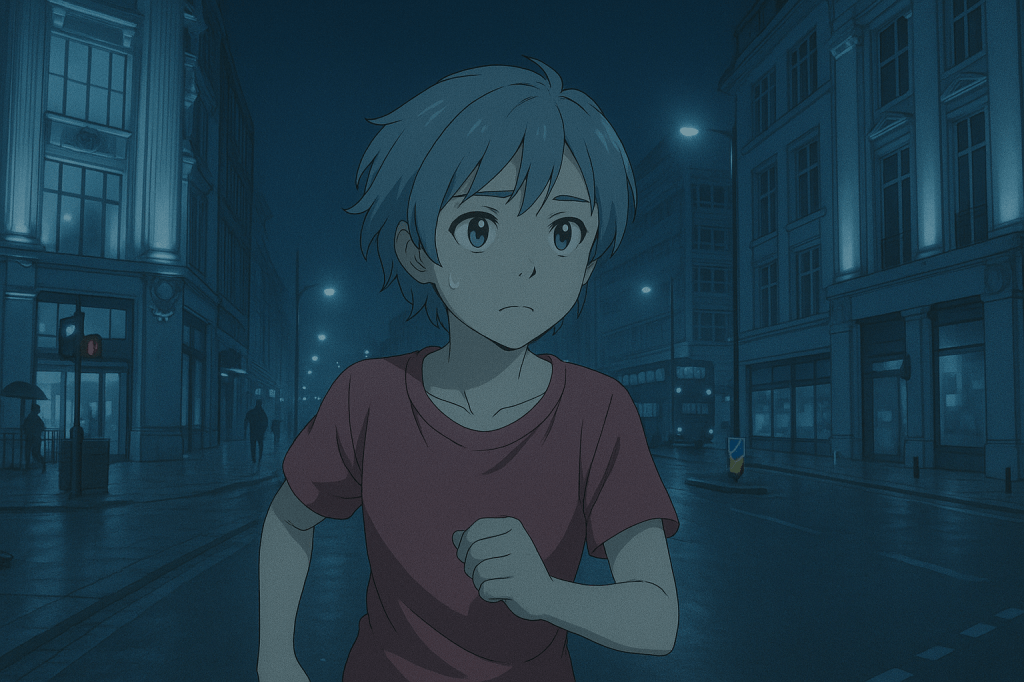
I lived in a tiny flat in Golders Green. I put on a hoodie and joggers and went out. I ran around the block near my home. It was freezing. I was nervous. But I ran. I got back home in 15 minutes—it felt like forever.  But I was proud. I had done it. So I went out for the second round. 

Running outside was nothing like running in a gym. There were no walls, no roof, no music. Just me and the cold air and my own breath. I felt exposed, like anyone could see me. It was scary, but also exciting.

I carried a few sweets and coins in one pocket and my Oyster card and ID in the other. I made sure my house key was safe. I learned the street names and counted my turns. I started saying hello to an old man with a long silver beard who always sat on his porch and watched me run by.

While running, I started thinking about my future. How to get a job. What I’d say in interviews. What I could do next. All the questions that made me feel stuck didn’t feel so scary anymore. My brain worked better when I ran.

After each run, I came home a little stronger. A little braver. I ran three times a week.

In July 2004, I ran the Crisis Square Mile Run along the Thames River. There was music on the street and cheering. I was so proud of myself. I hadn’t found a job yet, but I had found something else—I had found my strength.

That first run changed my life. It was just me and my legs on a cold street. But something new started that day.

It’s been over 20 years, and I’m still running.

So if you’re feeling lost, if you don’t know where to start, maybe try putting on your shoes and going for a run. You never know—you might find your way, just like I did.