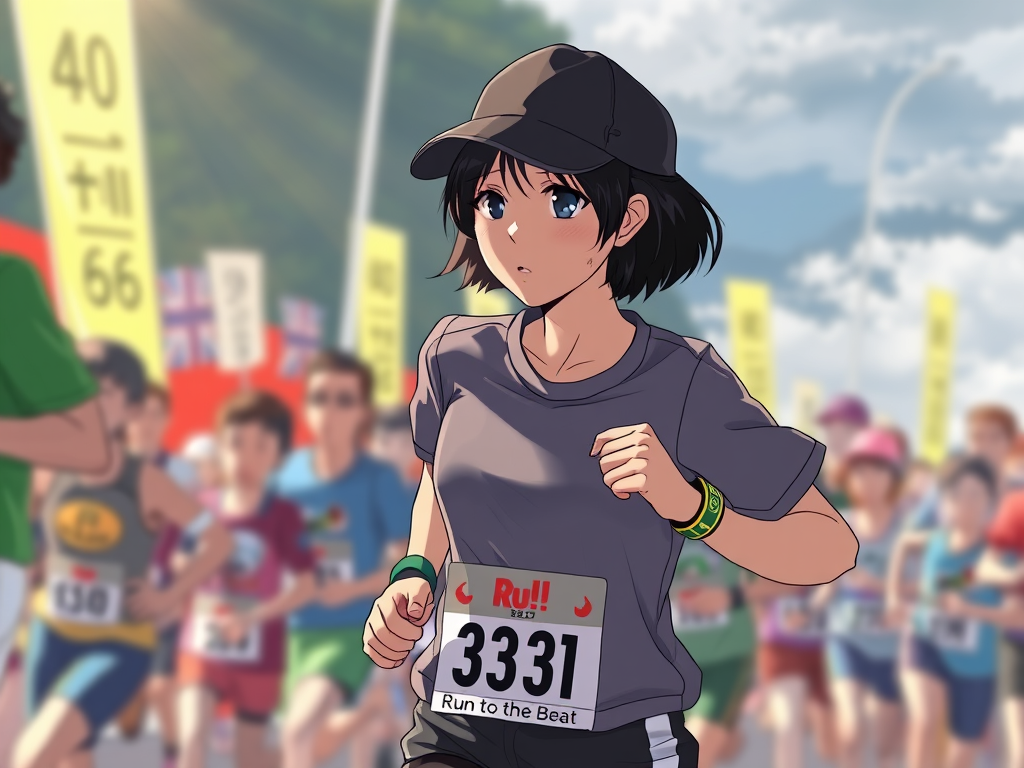
I wasn’t born a runner. I was the one who came last in the school sports day. Everyone at school knew me as the daughter of Mr Kawahara – an elite gymnast, respected coach in sports, and headmaster. Then, there was me. Small, clumsy, legs turned inward, always tripping over my own feet. I was an embarrassment.
It Started with Tears
My first running event was the Crisis Square Mile Run, which could hardly be called a race. After that, I did a few 10Ks with friends and ran twice a week to keep fit. My then-boyfriend encouraged me to sign up for a half marathon—we broke up just after I registered. He was supposed to be my cheerleader, but he left. On the morning of the race, I swallowed my tears when I stood on the start line. It is going to be OK. I can do it. I do not require a man on the roadside to cheer me on. I can run a half-marathon on my own. So, I did. Around mile 10, I had sharp pains in my ankle and knee. I couldn’t run anymore. Everyone started overtaking me. Everyone on the roadside was yelling at me, “Come on, run!” I was in tears and hobbling, but I managed to cross the finish line. 2 hours and 20 minutes.
Turning Up, Getting Lost, Coming Back
After the first half-marathon, I looked for opportunities to make friends through running. One of my friends from the scuba diving club invited me to a local running group, now known as London City Runners. He wasn’t particularly fit, so I thought, why not? On a Tuesday evening, I joined a group of office workers who gathered to run together from Bermondsey Street along the Thames Path. It was a social group, never meant to be a serious running club. But, in reality, they were very fast. On the first day, I had already lost sight of the runner I was following just after crossing Tower Bridge. Someone behind me shouted, “Turn left and cross the Wobbly Bridge!” and then vanished. By the time I reached the bridge, I couldn’t see anyone from the group. I eventually made it back alone—it was already dark. Still, I wanted to keep going.
Every Tuesday and Sunday, I had sleepless nights before the club run, filled with worry that I might be left behind and no one would want to speak to me. Slowly, though, I made friends. Post-run coffee and cake on Bermondsey Street Coffee became the highlight of my week.
That Night with Mo Farah
On that magical day in 2012, I sat with my friends from London City Runners at Potters Fields Park by the Thames to watch Jessica Ennis and Mo Farah compete for the Olympic golds. We jumped and screamed, “Go! Go! Go!” like they could hear us. Mo won three gold medals that evening. By the end of that evening, I too wanted to train like a proper competitive runner.
Back home, I resurrected my unused Serpentine RC membership and signed up for interval training. The very next week, I got an email saying I’d won a London Marathon ballot place. Coincidence, maybe. But it felt like some higher power was telling me to run.
Showing Up Anyway
On day one of my ‘structured training,’ I innocently put my pace as “6” in the sign-up sheet. What I didn’t realise was that the sheet was asking for mile pace, not kilometre pace. Everyone listed 6 minutes, so I thought, “Great, I can run 10K in an hour!” How ridiculously wrong I was… Six-minute miles? I was always the last to finish. Everyone had gone home by the time I was done. I was skinny, blown sideways by the wind, but I showed up every week. I told myself I’d keep coming until the coach asked me to leave.
Three months in, the coach finally spoke to me: “Erm… how do I pronounce your name?” That was it. I was accepted.
From there, Serpentine RC became my life. I competed in the Assembly League, Metropolitan League, County and National Championships, the Isle of Wight Fell Running Championship, Green Belt Relay (around the M25), Welsh Castles Relay (top to bottom of Wales), and countless other races. I travelled across the country with the club and trained 50–70 km a week. If I couldn’t make club training, I ran home from work. I purchased a headtorch and a running rucksack. I’d change in the office loo, step into the lift in my reflective kit, and head out into the cold. Once, a security guard at the HSBC headquarters building offered me his gloves. He said, “Hey, Miss….take this. You need this. Oh, don’t worry about me, it is cold outside…”
Running Changed Everything
Everything changed. I made friends. I found my tribe. I started eating properly. I slept better, trained smarter, and took care of my body so I could continue running. My priorities changed—from wanting to look pretty to wanting to run faster and further.
Every Monday, a colleague would ask, “So, Hisayo, did you run this weekend?” I say, “Yes, so what?” He wants to try his new joke. I then say, “Look, I run every day and every weekend. Don’t ask me if I have run or not. You are not funny.”
Over time, I learned to lead. I organised social trail runs for the club on weekends. When I briefed people who came to my runs, I always made it clear: we run with the slowest in the group. I was often the last. If I led, it had to be my way. And everyone respected that.
Still Turning Up
I was never in it to win anything. I still don’t run a six-minute mile. I am still the last one to finish in most club sessions. I continued because, somehow, I am still living in that magical moment when Mo Farah won his third Olympic Gold in the historic 10K race. I am still believing in the dream that magical things happen to those who run. Because running changes people’s lives. But you’ve got to keep at it. It really doesn’t matter if you’re slow or not so fit. Show up. Even when you’re last. Especially when you’re last.
 runhisayorun