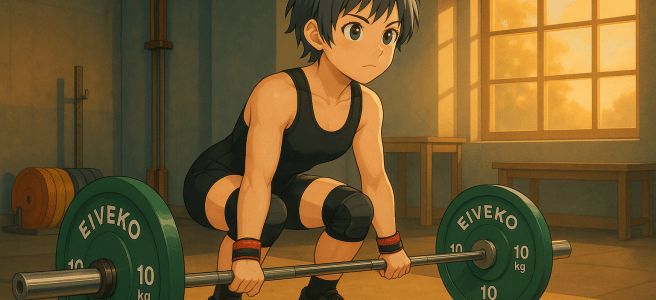
Breaking Barriers and Finding Strength

Goodbye from HSBC

In November 2018, I was made redundant from HSBC. Eight years of hard work. Long hours. A job I didn’t even like. I stood on the platform at Canary Wharf, holding a neat little divorce paper from HR. Shellshocked. I was at a loss. How dare you?

But underneath the shock, I was somewhat relieved. No more 45-minute breathers hiding in the company gym. No more soggy sandwiches and overpriced lattes. I could finally make coffee at home, cook my own lunch, and maybe—just maybe—do something meaningful for once.

I enrolled in a Pilates practitioner course. It felt like a logical next step. I’d done years of ballet and contemporary dance—core strength, mobility, body awareness, all that. Maybe I could teach runners how to move better.

Why Not Pilates?

The more I learned, the more I realised that this wasn’t it. Pilates has its place—Joseph Pilates developed the reformer Pilates to help WWI soldiers who were amputated in hospital beds. But I wasn’t bedbound. I was an ultrarunner pounding trails, absorbing forces four times my body weight with every step.  Pilates wouldn’t cut it. I needed something more powerful, stronger, and heavier.

Falling in Love with That Bar

I asked a friend from the running club: “Know anyone who can teach strength training?” She gave me the contact details of a guy who had started a barbell club. I had no idea what I was getting into. I vaguely thought maybe he would teach me how to bench press. Or deadlifts. Those were the only lifts I knew. But he turned out to be an Olympic lifting specialist.

On day one, I stood with a barbell in my hands, shrugging my shoulders up and down. No idea why. Just did what I was told.

The club was an extension of the university’s barbell club. Everyone around me was in their twenties—students and recent grads. Wonderfully young and trendy with flexible joints. Meanwhile, I was a 54-year-old ultrarunner with stiff joints who couldn’t even squat below parallel.  I’d never felt more miserable and out of place. And I definitely wasn’t “one of them.”

But I didn’t leave. I was intrigued. As a movement nerd who loves watching how the human body moves, I wanted to understand the mechanics. I dreamed of one day catching a snatch in a full deep squat. I watched videos. Took notes. Practised.

This Place Is Not for You

One day, I managed to secure one of the gym’s four squat racks during rush hour. I was trying to back squat when a smiling PT walked over.

“Hey, I think this is too heavy for you, you might get injured. Why don’t you come over here with me, I’ll show you some kettlebell work.”

I knew what he meant. “This is not for you. You don’t belong here, old lady.

That night, I ordered my own squat rack, barbell, and bumper plates. If I wasn’t welcome there, I’d train at home.

Then COVID hit. Boris announced full lockdown, and I found myself sitting in my living room, alone with my new equipment while the world shut down.  For the next two years, I trained on my own. I never went back to that gym.

Pain and Anger

During this time, I was suffering from severe back pain. My hope was to get the root cause, once and for all. I sat with the sports consultant with the MRI scan result in front of us. The consultant walked me through the results from the lab. Basically….I have degeneration in my lower spine—cartilage damage, marrow oedema, and bone fusion between L4 and L5.

“Cut your running down to 20km a week,” he said, as a matter of factly. “Stay away from explosive movements. At your age, with this kind of wear and tear, Olympic-style lifting is inappropriate. You are post-menopausal, after all.”

Then came the osteopath: “You just have osteoarthritis. This is normal for someone your age. It’s called wear and tear. There’s nothing we can do about it. But you can learn to manage the pain.”

I was furious.

I’d lived with back pain my entire life. By age 13, I had chronic back pain from gymnastics and was the youngest patient in the physio clinic. Through falling grades and sleepless nights, I’d pushed through the pain. I’d tried every pain management technique available on earth: physiotherapists, osteopaths, chiropractors, acupuncturists, Reiki practitioners. I’d learned yoga, Pilates, aqua-walking, and the Feldenkrais method. I’d always had ergonomic chairs, back rests, and sit-stand desks at work—all to manage the pain, hoping that one day it would go away.

Not one person had helped me eliminate my back pain.

And now this: Too old. Too broken. Sorry, but it’s too late.

I was absolutely furious.

I Want to Get Strong

I cancelled my appointment with the osteopath. I didn’t need another pain manager. I needed a different approach entirely. Instead, I hired a strength and conditioning coach focused on sports performance.

I have absolute faith in physical therapy.  Strength is the key.  “I want to get strong. Design a program for me. I want to run. I want to lift. I want to move. I’m going to train like you’ve never seen before.”

Three years later, after dozens of strength training blocks, I am stronger than I have ever been in my life. I am no longer in pain. I can now squat down to untie my shoelaces after a 20km run. Look at that. I couldn’t do that before!!

When I finally took back control of my body, everything changed.

The Lesson

Don’t accept advice from people who tell you that you’re too old or too broken. Work with people who believe you can achieve whatever you set your mind to.

Because you almost always can.  It’s never too late.

Let’s challenge the norm. Together.
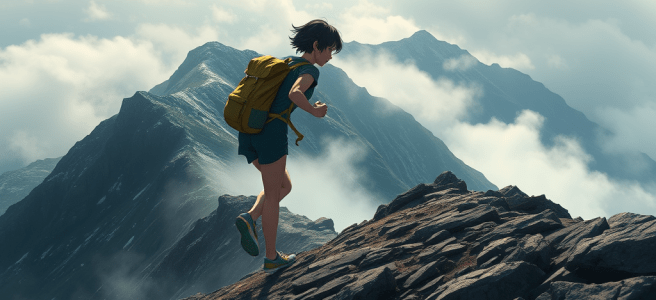
Chasing the Dragon: Five Days Across a Country

The Dragon’s Back Race is a five-day mountain race that spans 315 km across the entire Welsh mountain range, with a brutal 15.5 km of elevation gain. Billed as the ‘toughest foot race in the world,’ the course includes only a few mandatory sections; competitors have the freedom to choose their own routes. There’s no external support — each competitor carries everything they need.

In 2017, I was one of the 223 starters.

Why did I enter? It started with a YouTube video — sweeping aerial shots of runners crossing the ridgelines of the Welsh mountains. I wanted to be one of them.

I wasn’t particularly fast. My navigation skills were basic. I was turning 52 and just fighting to hold on to the fitness I had. If I had to wait until I was fit enough to do this race, it would never happen. I’d rather try and fail than wonder forever.

Day 1: Carneddau, Glyderau, Snowdon
Distance: 52 km | Elevation Gain: 3.8 km

A cold, windy start at Conwy Castle at 7:00 a.m. I stood there on my own, one head height shorter than everyone else, beard-less and tattoo-less.

A man looked down at my feet. “You are wearing the wrong shoes, luv.” He was referring to my barefoot shoes. This happens to me all the time. I just nodded and looked away.

The ridges were busy with 223 runners all trying to pass through. We scrambled over rocks of every size, up and down, left and right. Wind whipped across the ridges, as if trying to blow us off. I kept my map tucked against my stomach, juggling movement, hydration, and trying not to fall. The rational part of me was telling me to stop and admire the beautiful view from the summit. No. My eyes were glued to the underfoot.

I knew it. The Glyderau range was difficult. Before the race, I’d recce’d the route twice, and each time, I got confused. I scrambled up, hands and knees on loose scree. Clouds swallowed the summit. GPS becomes totally unreliable in a mountain range like this. I trusted my sense of direction and gut.

Instead of reaching the top of Tryfan, I found myself on top of a giant boulder. This boulder did not appear to be connected to anything underneath. A thick fog came down, blinding my eyes. I could not see anything a metre ahead. In that split second, I forgot where I came from. Damn, what a fool you are…

I squatted down and lowered my feet, rolling sideways to slide down. I slid down at a faster pace than I’d hoped, but I did stop eventually. Small pieces of shattered scree ended up in my mouth, pocket, and nose. I sat on a large rock, my heart still pounding from the shock. I missed the cut-off.

Day 1 ended with a disqualification. I didn’t even reach Crib Goch — just like that.

Day 2: Nant Gwynant to Dolgellau
Distance: 58 km | Elevation Gain: 3.6 km

4:45 a.m. alarm for a 6:00 a.m. start. A new day. A second chance. Let’s go.

It was cold, wet, and misty. Loose scree underfoot made every step a fight. We were ticking off the controls on the mountain. One person headed in one direction, while another came back from the opposite direction, shouting that they were in the wrong place. Then, everyone around me vanished in all different directions. GPS was not working.

Eventually, I found all the controls on the mountain and descended to the moorland.

Navigation in the moorland is different from that in the mountains. It was no easier, but at least the sun was out.

Luckily, I teamed up with two other runners. We had a map, a compass, and a GPS between us. We went back and forth, got lost in bogs, and crossed streams. We were 1.5 hours too late to arrive at the halfway cut-off point. Oh well. We tried, didn’t we?

Later that evening, a heated argument broke out between a disqualified runner and the organisers. Sharp words were exchanged. He stormed off.

Most of the disqualified runners left the campsite immediately after being disqualified. This was not a requirement of the race, but most participants left anyway.

I didn’t agree with the idea that you are a ‘loser’ when you are disqualified. But that’s just me.

Day 3: Dolgellau to Ceredigion
Distance: 71 km | Elevation Gain: 3.5 km

The legendary day. The longest. The hardest. Survive Day 3 and you’ve completed the race.

Another 4:45 a.m. alarm. My body felt heavy. My humour was gone. I hadn’t slept well. More runners packed and left. I was beginning to feel like a loser too.

Bog after bog. Slippery scree. Another bog. Every time I sank, I had to climb out. It drained my energy. One of the passing runners was a serving army officer on holiday. “You’re doing incredibly well with your small body, luv. This stuff is hard. Harder than the march, I tell ya…” Great. A new career opportunity. Perhaps I should apply to the Royal Army.

Approaching the village of Machynlleth, the halfway checkpoint, I had only 20 minutes to cover the final 4km. Running 4km in 20 minutes may be doable on a normal running day. But I’d been running the mountains for three days and was on my feet for over six hours by that point. My throat was burning from dehydration and heat. My legs were finished. Clock ticking. My heart sank.

That evening, the organisers announced a change: no more half-days. If you start in the morning, you must make the halfway cut-off. If you’re not committed to doing so, don’t start.

Fewer tents at the campsite as disqualified runners left.

Day 4: Through the Elan Valley
Distance: 71 km | Elevation Gain: 2.4 km

I didn’t sleep. Three disqualifications. No right to line up anymore. I was now officially a loser. I peeked from the tent as others left at 6:00 a.m. I so wanted to be one of them.

In the late morning, an announcement was made that a van would transport runners to the halfway point, as ten runners were willing to run the latter half of the route. I jumped in the van. My rucksack was ready — map, compass, sunscreen, GPS, water bottles, and legs.

It was a glorious day. The sun blazed. The bogs were still bogs, but everything felt easier. Both physically and mentally. I was learning something new every day.

By this stage in the race, I’d got into the habit of accepting water and sweets from random strangers on the route. And if no one was around, we just drank from streams — if the water looked clear, it was probably fine.

Some disqualified runners who had left the campsite in previous days came back to the roadside to cheer us on.

For the first time in the race, I crossed a finish line on foot in daylight.

The number of runners at the campsite was visibly down. Hardly anyone I spoke to on Day 1 was still at the campsite.

Day 5: Into Carmarthenshire
Distance: 63 km | Elevation Gain: 2.2 km

Last day. I decided to rely on the race van to the halfway point. I wasn’t chasing cut-offs anymore, and it was the final day after all. Let’s do my best and finish the race on foot. My tentmate Sabrina was leading the women’s race, so I wanted to see her win at the finish.

Another glorious day, very hot and sunny.

Then, I saw this mountain. It was the most ridiculously looking bump on the horizon, round, green, and with sharp ridgelines. It was the tip of the tail of the Dragon in the Dragon’s Back Race. It was waiting to be climbed.

I climbed one ridge, descended, and climbed another. Clouds swirled. My legs were heavy, but I was running through the ridges in the cloud. I couldn’t believe what I was doing. I was running Day 5 of the Dragon’s Back Race. I was a stronger person than I was five days ago.

Run, Hisayo, Run!!!

And then I really ran. Through the finish line.

Final Words

The Garmin data showed that I covered 200km with 10,000m of elevation over 37 hours. The winner did the full 315km with 15,000m of elevation in the same time.

I missed 115km — I would need two extra days to cover that distance. That’s OK. I could do that any other day.

I was the only runner who showed up every day to run despite being disqualified.

In 2017, out of 223 starters, only 127 finished the full race. I wasn’t one of them. But I was proud that I had tried. I was there. I shared five cracking days with some of the nation’s finest runners.

It was hard as nuts. It was glorious.

No regrets.

In case you are interested….

The organiser of the Dragon’s Back Race, Ourea Events, extended the race route to a six-day event, while also introducing flexible options (the Hatchling) that enable participants to complete half of each day’s route in subsequent years.

Links

https://www.dragonsbackrace.com/