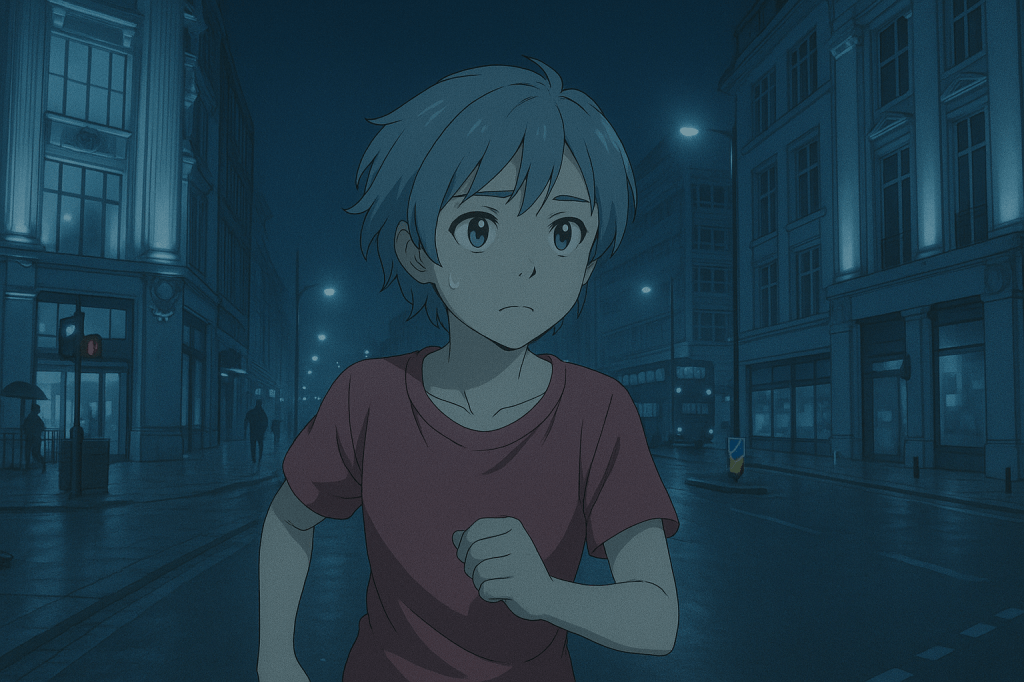
The Night Everything Changed
On one night towards the end of March 2021, I jumped out of bed in the middle of the night. My heart was pounding, as if I had just finished a 400-metre time trial. My breath was short and shallow. I choked and coughed. Is this COVID? No… I had only just received the vaccine a couple of weeks ago. Surely it couldn’t be.
I stayed up the rest of the night. I couldn’t breathe. My heart was beating so fast, and it was as if it was jumping out of my head. Do I call an ambulance? But we were in lockdown. Hospitals were overwhelmed with COVID patients. People were dying. No, you can’t just call an ambulance for something like this…
Lockdown Miles and Empty Streets
Let me rewind.
When the first lockdown began in March 2020, I did what many club runners did. I went out and ran. Every evening, I hit the streets of London – Oxford Street, Regent Street, SOHO, Fleet Street, and Trafalgar Square. All deserted. The lockdown will not last forever. This may well be the only and last chance in my lifetime to run through the streets of London like this.
In short, I was having the best time of my life as a runner.
This is ‘ageing’, Ms Kawahara….
I called the GP. He didn’t sound particularly concerned.
“Oh, you’re just having a heart palpitation. Very common at your age. Nothing to worry about. Oh, you’re a runner? Excellent….”
He hadn’t even seen me. I insisted that this was serious. I explained. This was a sudden onset and an intense one, exactly two weeks after the COVID vaccine. He just repeated the same line.
“It’s unfortunately part of ageing, Ms. Kawahaaaara…You are not a 20-year-old anymore.”
Eventually, he agreed to refer me to an ECG and a 7-day Holter monitor.
My Body and Its Numbers
But I knew my body. Ageing does not happen like this.
I’ve been wearing a smart sports watch with a heart monitor for years. I knew my normal resting heart rate. What was usually 45-50 bpm had plummeted to 35-40 bpm. During a steady run, I’d be between 160 and 180 bpm. Now it was spiking above 200 bpm, triggering red alerts on my sports watch. Not just that. I was so breathless. I had to stop for a breath every 100 metres.
My blood pressure, which had never fallen below 90/70, now sat at 80/60 most days. Everything felt harder. Jogging felt like sprinting. Climbing stairs left me breathless. A commute to work ended in a blackout.
Someone had broken into my body and stolen my fitness. Overnight.
I carried on running regardless. I ran until I coughed up so hard I couldn’t breathe anymore, or until chest pain pushed my heart up my throat. Then, I’d check my pulse and blood pressure. The ridiculously low blood pressure reading and the same alert, ‘abnormal heartbeat detected’. At night, my heart rate dipped below 35 bpm. Fainting while getting up from the bed became the norm.
My wings had been taken away.
Seeking Answers
I read everything I could find about arrhythmias and the vaccine’s cardiac side effects. I wasn’t questioning the science. I was living it.
Six months after my initial GP call, just as I returned the Holter monitor to St Thomas’ Hospital for review, Omicron swept across the UK. In that chaotic week, the NHS misplaced my test results.
“Sorry, Ms Kawahaaaara. We may need to repeat the test,” said the same GP. “Oh, you’re still running? Very impressive. But you know…, this is common for people your age.”
Colleagues and clubmates at the running club chimed in.
“We all get these things with ageing. It is not nice, is it?”
“My grandma had a pacemaker fitted. She is fine now.”
Sympathetic eyes. A sigh.
A Diagnosis but No Cause
A private cardiologist at London Bridge Hospital agreed to see me. He put me on a 14-day continuous heart monitoring, scans, and blood tests.
“There is no structural problem with your heart. You are fit and healthy. Just that, some people get these symptoms. We don’t always know why.”
He diagnosed me with Supraventricular Tachycardia (SVT) and signed me off with a prescription for beta blockers.
These tablets manage a racing heartbeat by slowing the heart rate and lowering blood pressure. They also suppress cardiac output. They made me dizzy and my breathing even more difficult, with the bonus of chronic chest pain.
I continued to run, but shorter and slower than before. I was constantly dropping out of the club sessions and races. If I didn’t end up in the medic’s tent at the end, the race was a success.
My confidence in sports went down the drain.
Four Years On
Towards the end of 2024, the arrhythmic episodes grew fewer and further apart. By then, using AI-powered research, I’d found some studies documenting cardiac rhythm disruption as a side effect of COVID vaccination.
Knowledge is power. I tried everything the papers suggested might help. Mineral supplementation, breath work, neuromodulation, careful attention to nutrition, hydration, sleep, and stress. In March 2025, I halved my beta-blocker dose. Two months later, I stopped them entirely.
That spring, I returned to run the North Downs Way for the first time in years. Week by week, I ticked off sections. Six months later, I completed the entire 153-mile length.
My confidence was back.
My heart finally remembered how to beat properly. I am no longer breathless and have no chest pain when running. I can breathe the air!! Finally!!!
Onward
I’ve been given a second chance to run. This is a gift. I’ve got to make the best use of it.
I have some big races planned now. Not because life is short. Because my legs remember what they were made for.
And they are ready.
Run Hisayo Run
Links
If you are a fellow athlete who has experienced something similar, you may find these links helpful:
1. COVID-19 Vaccination and Cardiac Arrhythmias: A Review
2. Arrhythmias after COVID-19 Vaccination: Have We Left All Stones Unturned? (PubMed Central)
 runhisayorun