Weigh-In Pains
In the morning of the competition, I enter the weigh-in room. I see the scale on the floor. The technical officials are sitting at the desk. Shoes, trousers, hoodie, and T-shirt. Off they come. I dread this moment as I step onto the scale.
I stay still as my weight is read out. I step off.
I stand there in the body-fit singlet. I feel exposed. I hate how I look. This part never gets any easier. This is a sport governed by weight categories.
I have never embraced my body as to its size or appearance.
Sports Where Size Matters
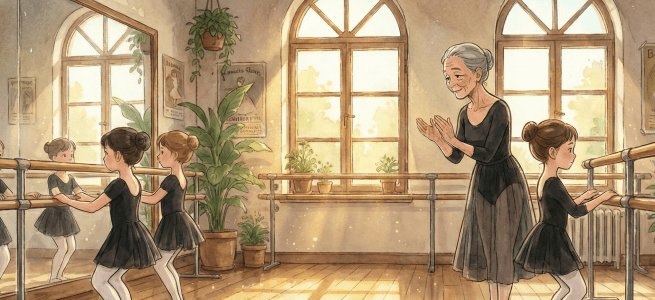
In ballet, I was too heavy and chubby. Or at least, I believed I was. In the studio in Japan, I was always surrounded by very thin girls. We wore leotards, pink tights, and pointe shoes. The girls were elegant and delicate. And that was what women were expected to be anyway.
Westerners romanticise Japan.
Oh, look, everyone’s so thin and healthy. Obesity is so rare in Japan.
True. Japanese food is, by and large, healthier than the Standard Western Diet. But Westerners don’t understand the reality behind Japan’s slimness. There, there is nothing wrong with fat-shaming or ridiculing someone for being overweight in public. Gaining weight is a personal failure, a lack of discipline. The word ‘fat-shaming’ does not even exist in Japanese. People, especially women, are expected to stay slim, a standard that is often unrealistic by Western measures.
When I was a teenager, girls were expected to be delicate and tender. A girl was praised as a “箱入り娘 (hakoiri musume)”—a porcelain doll in a gift box. Later, fresh graduates were called “職場の花 (shokuba no hana),” meaning “flowers in the office.” We weren’t expected to lift anything heavier than chopsticks.
In the ballet studio, the teacher used to say, “Look at that man, Arnold, whatever! Do you want to look like that? Do not lift anything heavy!!! You will bulk up.“
So we laid out yoga mats and did a hundred reps of Pilates abs work instead.
In my twenties, I lived on lettuce and cucumbers during the week, with tomatoes for occasional treats. On weekends, I binged on cakes. My role model was Sylvie Guillem, the French ballerina. Bodyweight management was a constant struggle.
I was constantly fatigued, but strong coffee kept me moving. Then my periods stopped. But that was Okay. Not one person at the ballet studio had a regular period anyway.
From Dance to Distance
When dance left me with a broken heart, running found me. Running didn’t expect much from me. I just had to show up and run. That was easy. But I was too thin for a runner. I lacked the power to propel my legs forward.
Running changed my complicated relationship with food. To survive club training twice a week, I had to eat. With too little food, you don’t have energy to run. Then, too much food makes you sick during the training. I had to plan food carefully. What, when, and how much. Then came ultra-trail running, where caloric demands are immense. Here, you’ve got to eat. It doesn’t matter if you are hungry or not. You just eat. A lot.
Ultra-trail running was the first sport where my body became an advantage. Ultra-trail runners don’t run like track athletes or middle-distance runners, where power matters. It’s a long-haul endurance race. Runners move up and down mountains, carrying rucksacks for hours and days. Being short and light, I was finally celebrated as an “efficient” runner.
Then came weightlifting.
Too Light to Lift?
Weightlifting, ironically, is meant to be about fairness. Athletes are grouped by weight class so we can compete on a level playing field. But the system is far from fair.
The lightest female category is 48 kg. I often weigh 43 or 44 kg, which is five or six kilos under the category minimum. In a sport where bodyweight correlates with lifting potential, this matters. I have to meet the qualification standards designed for heavier women.
At the other extreme, the heaviest women’s class is 86+ kg. A woman weighing 130 kg can qualify by meeting the same standard as someone 40 kg lighter. The same 20 kg barbell represents almost half my bodyweight, but far less for others.
The standard kit isn’t built for my size either. Most weightlifting belts are 10 cm wide, cutting into my ribs and hips because my torso is shorter than most Westerners’. It took me years to find a 3-inch belt that fits. The lightest standard bar-and-bumper plate set starts at 25 kg, which is already 55% of my body weight. Some gym owners won’t even let you drop that bar if it’s “only” 25 kg. Imagine telling a 130 kg woman she must start with 70 kg and keep the bar off the floor. Outrageous, right?
And then comes the constant stream of comments.
“Have you been eating properly?”
“Are you getting enough protein?”
“You gotta eat to get strong.”
Come on. No one asks the overweight person to eat less in public. How rude!
Redefining Strength
I’ve worked with Michaela Breeze for over two years now. She is a former Olympian, but she is not a stereotypical stocky lifter. She is lean, tall, and long-limbed. She focuses on speed, power, and technique. And she prioritises injury prevention over numbers.
When I saw her demonstrate how to drop a failed lift safely for beginners, I knew this was someone who takes her athletes’ longevity seriously. Her coaching changed my understanding of the sport. That strength isn’t just about how much weight you can muscle, but how efficiently you move. With speed and power. Her textbook technique is proof that size isn’t everything.
My first two coaches, both young men, idolised bulk. Their eyes lit up when big lifters moved big weights. Their style relied on muscle size and strength.
I get far more excited watching a small-framed lifter who moves with technique and efficiency.
Health and Strength
With Japanese DNA, I will never grow big muscles like my Western counterparts. Despite all the hours in the gym, I still have osteopenic hips. Yes, “osteopenia”.
It wasn’t until my late 50s that I heard the word “osteopenia.” Friends and colleagues around my age were starting to break bones left, right, and centre. For the first time, I started to worry. After a lifetime of being underweight, I run the risk of fracture. No one ever warned me of that.
What I did in my twenties and thirties cannot be undone. It is a long-haul journey to rebuild the body.
Never mind that. Just focus on what you can do today.
I lift to get strong. That’s it. Simples.
I lift to challenge the system and stereotype. I redefine strength.
Stay focused.
Be Strong.
 runhisayorun