The Body Image in Sports

Weigh-In Pains

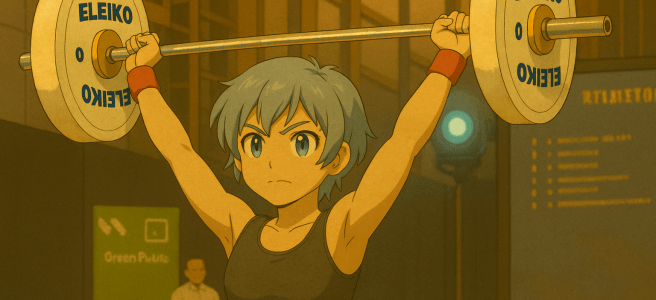
In the morning of the competition, I enter the weigh-in room.  I see the scale on the floor. The technical officials are sitting at the desk.  Shoes, trousers, hoodie, and T-shirt. Off they come. I dread this moment as I step onto the scale.

I stay still as my weight is read out. I step off.

I stand there in the body-fit singlet. I feel exposed. I hate how I look. This part never gets any easier. This is a sport governed by weight categories.

I have never embraced my body as to its size or appearance.


Sports Where Size Matters

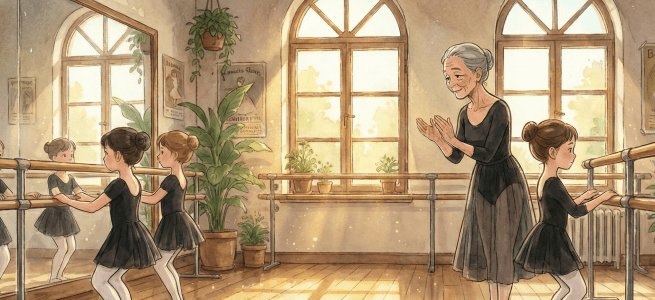
In ballet, I was too heavy and chubby. Or at least, I believed I was. In the studio in Japan, I was always surrounded by very thin girls. We wore leotards, pink tights, and pointe shoes. The girls were elegant and delicate. And that was what women were expected to be anyway.

Westerners romanticise Japan.

Oh, look, everyone’s so thin and healthy. Obesity is so rare in Japan.

True. Japanese food is, by and large, healthier than the Standard Western Diet. But Westerners don’t understand the reality behind Japan’s slimness. There, there is nothing wrong with fat-shaming or ridiculing someone for being overweight in public. Gaining weight is a personal failure, a lack of discipline. The word ‘fat-shaming’ does not even exist in Japanese. People, especially women, are expected to stay slim, a standard that is often unrealistic by Western measures.

When I was a teenager, girls were expected to be delicate and tender. A girl was praised as a “箱入り娘 (hakoiri musume)”—a porcelain doll in a gift box. Later, fresh graduates were called “職場の花 (shokuba no hana),” meaning “flowers in the office.” We weren’t expected to lift anything heavier than chopsticks.

In the ballet studio, the teacher used to say, “Look at that man, Arnold, whatever! Do you want to look like that? Do not lift anything heavy!!! You will bulk up.

So we laid out yoga mats and did a hundred reps of Pilates abs work instead.

In my twenties, I lived on lettuce and cucumbers during the week, with tomatoes for occasional treats. On weekends, I binged on cakes. My role model was Sylvie Guillem, the French ballerina. Bodyweight management was a constant struggle.

I was constantly fatigued, but strong coffee kept me moving. Then my periods stopped. But that was Okay. Not one person at the ballet studio had a regular period anyway.


From Dance to Distance

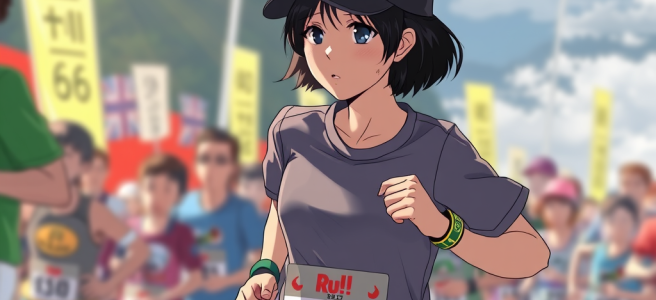
When dance left me with a broken heart, running found me.  Running didn’t expect much from me.  I just had to show up and run.  That was easy.  But I was too thin for a runner.  I lacked the power to propel my legs forward.  

Running changed my complicated relationship with food.  To survive club training twice a week, I had to eat.  With too little food, you don’t have energy to run.  Then, too much food makes you sick during the training.  I had to plan food carefully. What, when, and how much.  Then came ultra-trail running, where caloric demands are immense. Here, you’ve got to eat.  It doesn’t matter if you are hungry or not.  You just eat.  A lot.  

Ultra-trail running was the first sport where my body became an advantage. Ultra-trail runners don’t run like track athletes or middle-distance runners, where power matters. It’s a long-haul endurance race.  Runners move up and down mountains, carrying rucksacks for hours and days. Being short and light, I was finally celebrated as an “efficient” runner.

Then came weightlifting.


Too Light to Lift?

Weightlifting, ironically, is meant to be about fairness. Athletes are grouped by weight class so we can compete on a level playing field. But the system is far from fair.

The lightest female category is 48 kg. I often weigh 43 or 44 kg, which is five or six kilos under the category minimum. In a sport where bodyweight correlates with lifting potential, this matters. I have to meet the qualification standards designed for heavier women.

At the other extreme, the heaviest women’s class is 86+ kg. A woman weighing 130 kg can qualify by meeting the same standard as someone 40 kg lighter. The same 20 kg barbell represents almost half my bodyweight, but far less for others.

The standard kit isn’t built for my size either. Most weightlifting belts are 10 cm wide, cutting into my ribs and hips because my torso is shorter than most Westerners’.  It took me years to find a 3-inch belt that fits. The lightest standard bar-and-bumper plate set starts at 25 kg, which is already 55% of my body weight. Some gym owners won’t even let you drop that bar if it’s “only” 25 kg. Imagine telling a 130 kg woman she must start with 70 kg and keep the bar off the floor. Outrageous, right?

And then comes the constant stream of comments.

“Have you been eating properly?”

“Are you getting enough protein?”

“You gotta eat to get strong.”

Come on.  No one asks the overweight person to eat less in public. How rude!  


Redefining Strength

I’ve worked with Michaela Breeze for over two years now. She is a former Olympian, but she is not a stereotypical stocky lifter. She is lean, tall, and long-limbed. She focuses on speed, power, and technique. And she prioritises injury prevention over numbers.

When I saw her demonstrate how to drop a failed lift safely for beginners, I knew this was someone who takes her athletes’ longevity seriously.  Her coaching changed my understanding of the sport.  That strength isn’t just about how much weight you can muscle, but how efficiently you move.  With speed and power.  Her textbook technique is proof that size isn’t everything.

My first two coaches, both young men, idolised bulk. Their eyes lit up when big lifters moved big weights. Their style relied on muscle size and strength.

I get far more excited watching a small-framed lifter who moves with technique and efficiency.


Health and Strength

With Japanese DNA, I will never grow big muscles like my Western counterparts.  Despite all the hours in the gym, I still have osteopenic hips.  Yes, “osteopenia”.

It wasn’t until my late 50s that I heard the word “osteopenia.”  Friends and colleagues around my age were starting to break bones left, right, and centre. For the first time, I started to worry. After a lifetime of being underweight, I run the risk of fracture. No one ever warned me of that.

What I did in my twenties and thirties cannot be undone.  It is a long-haul journey to rebuild the body.  

Never mind that.  Just focus on what you can do today.    

I lift to get strong. That’s it. Simples.

I lift to challenge the system and stereotype.  I redefine strength.

Stay focused.

Be Strong.
Breaking Barriers and Finding Strength

Goodbye from HSBC

In November 2018, I was made redundant from HSBC. Eight years of hard work. Long hours. A job I didn’t even like. I stood on the platform at Canary Wharf, holding a neat little divorce paper from HR. Shellshocked. I was at a loss. How dare you?

But underneath the shock, I was somewhat relieved. No more 45-minute breathers hiding in the company gym. No more soggy sandwiches and overpriced lattes. I could finally make coffee at home, cook my own lunch, and maybe—just maybe—do something meaningful for once.

I enrolled in a Pilates practitioner course. It felt like a logical next step. I’d done years of ballet and contemporary dance—core strength, mobility, body awareness, all that. Maybe I could teach runners how to move better.

Why Not Pilates?

The more I learned, the more I realised that this wasn’t it. Pilates has its place—Joseph Pilates developed the reformer Pilates to help WWI soldiers who were amputated in hospital beds. But I wasn’t bedbound. I was an ultrarunner pounding trails, absorbing forces four times my body weight with every step.  Pilates wouldn’t cut it. I needed something more powerful, stronger, and heavier.

Falling in Love with That Bar

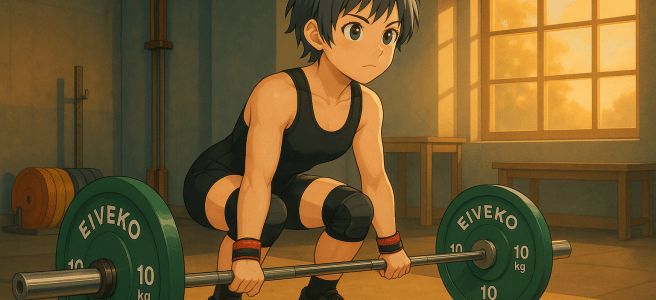
I asked a friend from the running club: “Know anyone who can teach strength training?” She gave me the contact details of a guy who had started a barbell club. I had no idea what I was getting into. I vaguely thought maybe he would teach me how to bench press. Or deadlifts. Those were the only lifts I knew. But he turned out to be an Olympic lifting specialist.

On day one, I stood with a barbell in my hands, shrugging my shoulders up and down. No idea why. Just did what I was told.

The club was an extension of the university’s barbell club. Everyone around me was in their twenties—students and recent grads. Wonderfully young and trendy with flexible joints. Meanwhile, I was a 54-year-old ultrarunner with stiff joints who couldn’t even squat below parallel.  I’d never felt more miserable and out of place. And I definitely wasn’t “one of them.”

But I didn’t leave. I was intrigued. As a movement nerd who loves watching how the human body moves, I wanted to understand the mechanics. I dreamed of one day catching a snatch in a full deep squat. I watched videos. Took notes. Practised.

This Place Is Not for You

One day, I managed to secure one of the gym’s four squat racks during rush hour. I was trying to back squat when a smiling PT walked over.

“Hey, I think this is too heavy for you, you might get injured. Why don’t you come over here with me, I’ll show you some kettlebell work.”

I knew what he meant. “This is not for you. You don’t belong here, old lady.

That night, I ordered my own squat rack, barbell, and bumper plates. If I wasn’t welcome there, I’d train at home.

Then COVID hit. Boris announced full lockdown, and I found myself sitting in my living room, alone with my new equipment while the world shut down.  For the next two years, I trained on my own. I never went back to that gym.

Pain and Anger

During this time, I was suffering from severe back pain. My hope was to get the root cause, once and for all. I sat with the sports consultant with the MRI scan result in front of us. The consultant walked me through the results from the lab. Basically….I have degeneration in my lower spine—cartilage damage, marrow oedema, and bone fusion between L4 and L5.

“Cut your running down to 20km a week,” he said, as a matter of factly. “Stay away from explosive movements. At your age, with this kind of wear and tear, Olympic-style lifting is inappropriate. You are post-menopausal, after all.”

Then came the osteopath: “You just have osteoarthritis. This is normal for someone your age. It’s called wear and tear. There’s nothing we can do about it. But you can learn to manage the pain.”

I was furious.

I’d lived with back pain my entire life. By age 13, I had chronic back pain from gymnastics and was the youngest patient in the physio clinic. Through falling grades and sleepless nights, I’d pushed through the pain. I’d tried every pain management technique available on earth: physiotherapists, osteopaths, chiropractors, acupuncturists, Reiki practitioners. I’d learned yoga, Pilates, aqua-walking, and the Feldenkrais method. I’d always had ergonomic chairs, back rests, and sit-stand desks at work—all to manage the pain, hoping that one day it would go away.

Not one person had helped me eliminate my back pain.

And now this: Too old. Too broken. Sorry, but it’s too late.

I was absolutely furious.

I Want to Get Strong

I cancelled my appointment with the osteopath. I didn’t need another pain manager. I needed a different approach entirely. Instead, I hired a strength and conditioning coach focused on sports performance.

I have absolute faith in physical therapy.  Strength is the key.  “I want to get strong. Design a program for me. I want to run. I want to lift. I want to move. I’m going to train like you’ve never seen before.”

Three years later, after dozens of strength training blocks, I am stronger than I have ever been in my life. I am no longer in pain. I can now squat down to untie my shoelaces after a 20km run. Look at that. I couldn’t do that before!!

When I finally took back control of my body, everything changed.

The Lesson

Don’t accept advice from people who tell you that you’re too old or too broken. Work with people who believe you can achieve whatever you set your mind to.

Because you almost always can.  It’s never too late.

Let’s challenge the norm. Together.

Two Sports, Two Selves

The training hall was filled with the clank of plates being loaded and unloaded. I sat alone on the floor, preparing my warm-up.  Around me, other lifters started moving in. They are followed by their coaches, teammates, and friends, etc. They were there to help the lifters time the lifts, to film their attempts for social media, and to offer encouragement. They were not teenage prodigies. These were grown-ups. Middle-aged recreational lifters at the British Weightlifting Master’s Championship.

I couldn’t help but wonder. Don’t they have anything else to do on the day? So, who’s paying for all this?

As I watched the entourages, a familiar ache settled in my stomach. A little gremlin perched on my shoulder and whispered.    

Look at you, sitting alone again. Because you are hopeless.

The Tale of Two Worlds

I am in two sports that exist in a completely different universe.  I have become a different version of myself in each. One is running, and the other is Olympic Lifting.

Running is open. Inclusive. You can turn up to a Parkrun in a cotton T-shirt and baggy trousers, and no one will blink. Entry is free. People of all ages, shapes, and speeds show up. It is not about competing or showing off. It is all about turning up and doing your best. And most important of all, is to have a good time.

I didn’t buy my way into the running. I just ran. And ran. Because that was all I wanted to do. Running found me. Running gave me a space where I belonged. In that space, we are in the same tribe. I am happiest when I’m with my tribe.

Weightlifting, on the other hand, demands payment for entry.

The more I got into this sport, the more I saw how hard it is for others to even start. The gym memberships alone can cost £100+ per month for facilities with proper Olympic lifting platforms. Quality coaching runs £50-80 per session. The equipment that most people have never even touched requires instruction to use safely.

Olympic lifting bars start at 15kg or 20kg before adding any plates. The “light” 15kg bars are made for smaller hands, but they’re still heavy — especially when paired with 5kg bumper plates on each side. That’s a 25kg starting weight. Not something an average 50-year-old woman can just pick up on day one and start training on her own. This isn’t the council gym’s BodyPump class.

To get properly equipped and coached from scratch? You’re looking at £200-300 per month, minimum. That is, before you’ve even lifted a single weight in competition.

The Myth of Inclusion

“Weightlifting is for everyone,” they say. “We’re so inclusive.”

But wait. Look closer. Is it? Really?

There’s a quiet assumption that everyone starts from a place of access. There is an expectation of strength and mobility — in other words, you are assumed to be young and fit. And there’s something more. Something more systemic.

I come from an ultra-trail running background, where external support is often banned during races to ensure fairness. In ultra-trail running, support crews are considered a competitive advantage and thus unfair. In weightlifting, they’re not just allowed — they’re expected. 

The Ghost of a Family Script

Let me explain why this bothers me so much.

I have a sister who is three years older. We both did music, dance, and sports growing up. But when we both got to the university level, things started to change. My sister was the one with the talent. The one my parents poured all their energy and resources into.

“We can’t afford two kids doing art,” they said. “Do something useful. Earn a living.”, they said.

By that time, I had a resident gremlin on my shoulder 24/7 whispering into my ears.

Because you are hopeless.  You haven’t got talent.  You are not worthy of investment.  

So, while my sister studied music in Europe, I worked multiple jobs to fund my gap year trip to America. When she sang in the state opera house in Germany, I worked in a bank, paying bills. When I finally got my first bonus, I joined the studio and resumed dance as a hobby.

When I saw these lifters with the entourages that day, I thought of my sister. I thought of my sister with my parents, who were carrying her bags, taking photos, showering her with encouragement, and telling her how amazing she was. And I thought of all the people who never even got the chance — priced out of the sport, the support, and the spotlight.

When Passion Isn’t Enough

Weightlifting is a skill-based sport. You need mobility, strength and technique. You need all three. And you need time, coaching, and access.

If you’re working full-time, just getting to a suitable gym can be a logistical challenge. Many of the best-equipped gyms are either prohibitively expensive or overcrowded during peak hours.  And even when you do manage to show up, you still need someone to show you how to lift safely. Or, even if you are an advanced lifter, you still need constant coaching so that you don’t fall into bad habits. Those bad habits could stifle the improvement or lead to an injury.

Injuries in this sport are very common. But they aren’t always the athlete’s fault. Often, they’re the result of poor coaching or being left to figure it out alone. And when that happens, people leave quietly. The sport moves on. There’s always a constant stream of young, fit, affluent lifters ready to fill your place. You only need to look at social media to see who has taken your place.

Giving Myself Permission

I spent 35 years in banking — long hours, little time for myself. I chose the gym based on its location. The closer to my desk at the office, the better. The weightlifting gym with specialist equipment wasn’t even on my radar, let alone coaching packages. I just didn’t have the time to commit to either. I didn’t have the luxury of dreaming about my sporting potential beyond my day job.

What if someone had believed in my potential? Did I have potential? Would my life have been any different? What if I’d believed in myself sooner?

At 58, when I left full-time employment, I decided to stop wondering. Life is too short. I decided to give myself the privilege I never had before — to train as much as I wanted, to prioritise my health and wellness, to invest in a version of myself I’d never had a chance to grow into.

Most people don’t get to do this at my age. I know that. And I don’t take this privilege for granted.

Standing Tall

Back at the British Weightlifting Master’s Championship, I won the title in the 48kg class. I stood awkwardly on the podium, gold medal around my neck, and felt… nothing like a champion.

The little gremlin asked.

So, you think you’ve proven something? That you’re worth it now?

I am working on it. Not by training more, but by learning how to stand tall beside that voice. Learning to recognise when he speaks and choosing not to argue. But not to let him win either.

Some days, standing tall looks like showing up to compete. Other days, it’s celebrating a personal best. Most days, it’s simply remembering that I chose to be here.

At 60, I am lifting heavier than I ever imagined possible, in a sport that tried to escort me out before I even started.

The gremlin can stay on my shoulder. But he doesn’t get to drive me anywhere anymore.

The Starting Line

I wasn’t born a runner. I was the one who came last in the school sports day. Everyone at school knew me as the daughter of Mr Kawahara – an elite gymnast, respected coach in sports, and headmaster. Then, there was me. Small, clumsy, legs turned inward, always tripping over my own feet. I was an embarrassment.

It Started with Tears

My first running event was the Crisis Square Mile Run, which could hardly be called a race. After that, I did a few 10Ks with friends and ran twice a week to keep fit. My then-boyfriend encouraged me to sign up for a half marathon—we broke up just after I registered. He was supposed to be my cheerleader, but he left. On the morning of the race, I swallowed my tears when I stood on the start line.  It is going to be OK. I can do it.  I do not require a man on the roadside to cheer me on. I can run a half-marathon on my own. So, I did. Around mile 10, I had sharp pains in my ankle and knee. I couldn’t run anymore. Everyone started overtaking me. Everyone on the roadside was yelling at me, “Come on, run!” I was in tears and hobbling, but I managed to cross the finish line. 2 hours and 20 minutes.

Turning Up, Getting Lost, Coming Back

After the first half-marathon, I looked for opportunities to make friends through running. One of my friends from the scuba diving club invited me to a local running group, now known as London City Runners. He wasn’t particularly fit, so I thought, why not? On a Tuesday evening, I joined a group of office workers who gathered to run together from Bermondsey Street along the Thames Path. It was a social group, never meant to be a serious running club.  But, in reality, they were very fast. On the first day,  I had already lost sight of the runner I was following just after crossing Tower Bridge. Someone behind me shouted, “Turn left and cross the Wobbly Bridge!” and then vanished. By the time I reached the bridge, I couldn’t see anyone from the group. I eventually made it back alone—it was already dark. Still, I wanted to keep going.

Every Tuesday and Sunday, I had sleepless nights before the club run, filled with worry that I might be left behind and no one would want to speak to me. Slowly, though, I made friends. Post-run coffee and cake on Bermondsey Street Coffee became the highlight of my week.

That Night with Mo Farah

On that magical day in 2012, I sat with my friends from London City Runners at Potters Fields Park by the Thames to watch Jessica Ennis and Mo Farah compete for the Olympic golds. We jumped and screamed, “Go! Go! Go!” like they could hear us. Mo won three gold medals that evening.  By the end of that evening, I too wanted to train like a proper competitive runner.

Back home, I resurrected my unused Serpentine RC membership and signed up for interval training. The very next week, I got an email saying I’d won a London Marathon ballot place. Coincidence, maybe. But it felt like some higher power was telling me to run.

Showing Up Anyway

On day one of my ‘structured training,’ I innocently put my pace as “6” in the sign-up sheet. What I didn’t realise was that the sheet was asking for mile pace, not kilometre pace. Everyone listed 6 minutes, so I thought, “Great, I can run 10K in an hour!” How ridiculously wrong I was… Six-minute miles? I was always the last to finish. Everyone had gone home by the time I was done. I was skinny, blown sideways by the wind, but I showed up every week. I told myself I’d keep coming until the coach asked me to leave.

Three months in, the coach finally spoke to me: “Erm… how do I pronounce your name?” That was it. I was accepted.

From there, Serpentine RC became my life. I competed in the Assembly League, Metropolitan League, County and National Championships, the Isle of Wight Fell Running Championship, Green Belt Relay (around the M25), Welsh Castles Relay (top to bottom of Wales), and countless other races. I travelled across the country with the club and trained 50–70 km a week. If I couldn’t make club training, I ran home from work. I purchased a headtorch and a running rucksack. I’d change in the office loo, step into the lift in my reflective kit, and head out into the cold. Once, a security guard at the HSBC headquarters building offered me his gloves.  He said, “Hey, Miss….take this.  You need this.  Oh, don’t worry about me, it is cold outside…”  

Running Changed Everything

Everything changed. I made friends. I found my tribe. I started eating properly. I slept better, trained smarter, and took care of my body so I could continue running. My priorities changed—from wanting to look pretty to wanting to run faster and further.

Every Monday, a colleague would ask, “So, Hisayo, did you run this weekend?” I say, “Yes, so what?”  He wants to try his new joke.  I then say, “Look, I run every day and every weekend. Don’t ask me if I have run or not. You are not funny.”

Over time, I learned to lead. I organised social trail runs for the club on weekends. When I briefed people who came to my runs, I always made it clear: we run with the slowest in the group. I was often the last. If I led, it had to be my way. And everyone respected that.

Still Turning Up

I was never in it to win anything. I still don’t run a six-minute mile.  I am still the last one to finish in most club sessions.  I continued because, somehow, I am still living in that magical moment when Mo Farah won his third Olympic Gold in the historic 10K race. I am still believing in the dream that magical things happen to those who run. Because running changes people’s lives. But you’ve got to keep at it. It really doesn’t matter if you’re slow or not so fit. Show up. Even when you’re last. Especially when you’re last.

Run, Hisayo, Run!

It was a cold December day in 2003.  I was working a night shift at the Crisis Open Christmas shelter in London. I had just finished my MBA but couldn’t find a job.  I had one year left on my visa, and I was scared. I didn’t know what would happen to me. Would I end up with no home? No country? I was worried every day.

I didn’t have many friends. I hadn’t spoken to my family in Japan for almost four years. I felt alone. The happy Christmas lights and music on the streets only made me feel more left out.

I wanted to do something that felt useful. I wanted to feel needed. So I signed up as a volunteer at the night shelter. I didn’t know what to expect, but I didn’t want to be alone at home.

I sat on the floor with the guests. We didn’t have to talk if we didn’t want to. We could just sit. One man and I ended up sitting together for a long time. He told me about losing his family and how much he regretted some things. I told him about my family, how we weren’t in touch, and how lonely I felt.

Back in Japan, I used to dance. I was part of a small dance company. I had friends, a teacher I loved, and we danced together all the time. It was part of me. Since coming to the UK, I hadn’t danced at all. I didn’t know anyone who danced. I didn’t have money for a gym or studio.

After listening to me, the man said, “Why don’t you just run?”

I looked at him like he was crazy. “Run?” I said.

“It’s free,” he said. “Just get some trainers and go outside. You will feel better.”

I didn’t like the idea. I didn’t think of myself as a runner. I liked music and dancing, not running. So I just smiled, nodded, and thanked him for the idea anyway.

Later that night, some other volunteers were talking about a fun run in spring to raise money for Crisis. One of them said he’d run dressed as Scooby-Doo! He was a middle-aged man who wasn’t sporty at all, and we were all laughing about how slow we would be. I said, “Okay, I’ll do it too.”

When I say I’ll do something, I mean it. So I started training.

I lived in a tiny flat in Golders Green. I put on a hoodie and joggers and went out. I ran around the block near my home. It was freezing. I was nervous. But I ran. I got back home in 15 minutes—it felt like forever.  But I was proud. I had done it. So I went out for the second round. 

Running outside was nothing like running in a gym. There were no walls, no roof, no music. Just me and the cold air and my own breath. I felt exposed, like anyone could see me. It was scary, but also exciting.

I carried a few sweets and coins in one pocket and my Oyster card and ID in the other. I made sure my house key was safe. I learned the street names and counted my turns. I started saying hello to an old man with a long silver beard who always sat on his porch and watched me run by.

While running, I started thinking about my future. How to get a job. What I’d say in interviews. What I could do next. All the questions that made me feel stuck didn’t feel so scary anymore. My brain worked better when I ran.

After each run, I came home a little stronger. A little braver. I ran three times a week.

In July 2004, I ran the Crisis Square Mile Run along the Thames River. There was music on the street and cheering. I was so proud of myself. I hadn’t found a job yet, but I had found something else—I had found my strength.

That first run changed my life. It was just me and my legs on a cold street. But something new started that day.

It’s been over 20 years, and I’m still running.

So if you’re feeling lost, if you don’t know where to start, maybe try putting on your shoes and going for a run. You never know—you might find your way, just like I did.